What a nonogram is
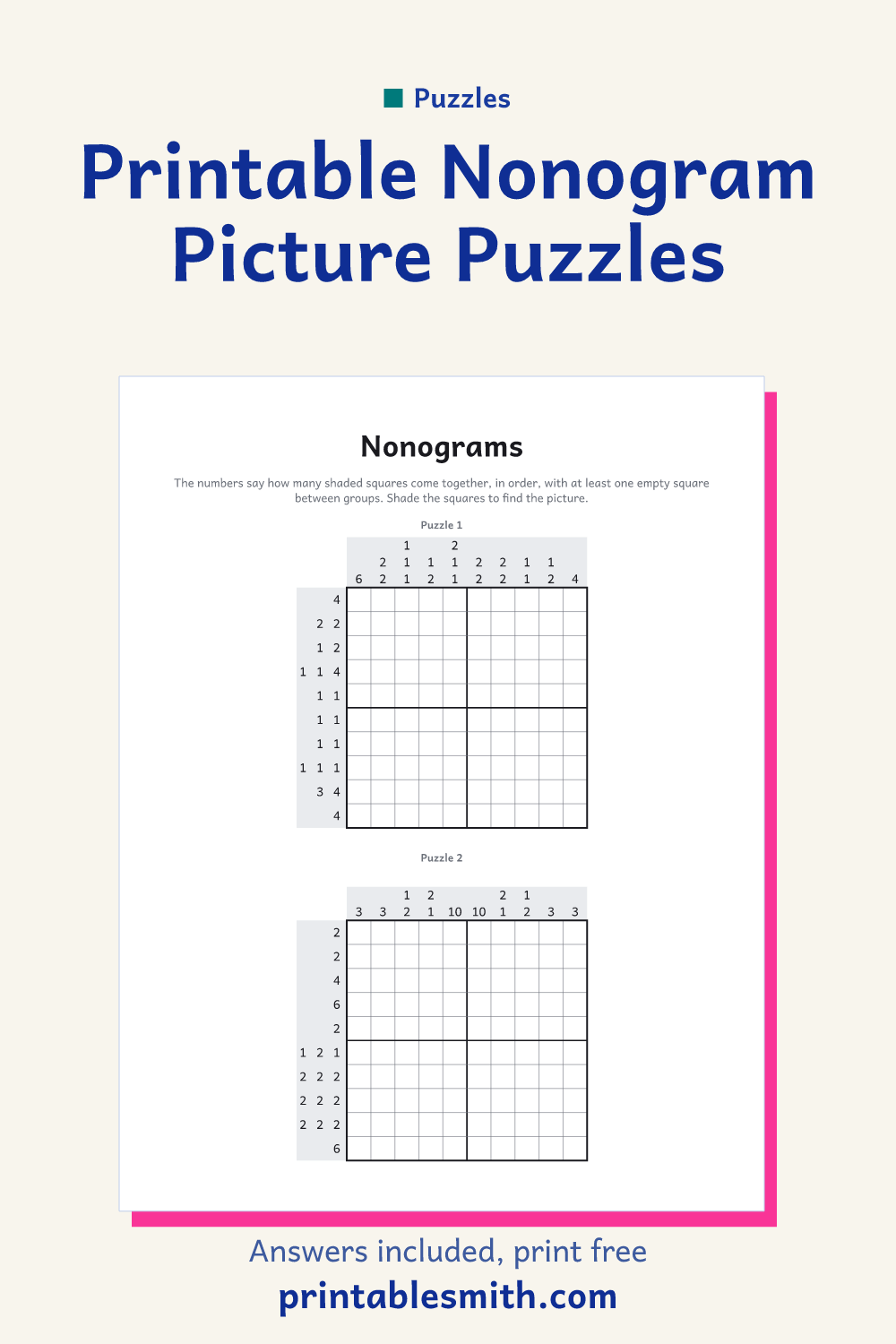
A nonogram is a grid with a list of numbers beside each row and above each column. The numbers give the runs of shaded squares in that line, in order, with at least one empty square between one run and the next. A clue of 3 1 means three shaded squares side by side, a gap, then a single shaded square. Shade every line so it matches its numbers and a picture appears. The same puzzle also goes by hanjie or paint by numbers puzzle.
A sixth grade math teacher keeps a tray of 10 × 10 nonograms for students who finish the Friday quiz early. She prints twelve, two to a page, so neighbors get different pictures, and keeps the answer pages in her desk drawer. Her one rule is that nobody names a picture out loud until every line matches its numbers, which is hard when the anchor starts to show.
The pictures come from the site’s own drawings of animals, food and everyday things. A solver that works one line at a time, the way a person does, finished each one with no guessing before it was kept, so every puzzle has a single answer. The answer page shades each picture and names it under the grid, such as “The picture: cat”, with the name marked in red; the puzzle pages themselves are black ink only.
How to print nonograms
- Choose a Grid size: 10 × 10 for a first try or younger children, 15 × 15 for a puzzle that lasts a longer sitting.
- Ask for anywhere from 1 to 12 under How many puzzles, and set Puzzles a page to 1, 2 or 4; one a page gives the biggest squares.
- Leave Add the answers ticked for the shaded pictures at the back. Large print makes the squares and clue numbers bigger and keeps to one or two a page.
- Choose A4 or US Letter, add Print in OpenDyslexic for readers who like it, then press Download PDF.
- Press New pictures for a different set, or Copy link to these nonograms for an address that prints the same pictures another day.
Save it for later
Pin this sheet to find it again next time, or to share it with another teacher or parent. The link brings them straight to this page, ready to print.
Save to PinterestMore sheets from this maker to pin:


Tips for solving nonograms
- Begin with the longest clues. In a row of 10, a run of 8 covers the middle six squares wherever it starts, so shade those six at once.
- Put a small dot in every square you know is empty. The dots settle a line as surely as the shading does.
- Shade lightly with a soft pencil until a square is certain; a dark square rubbed out leaves a smudge that looks filled.
- Children new to the puzzle keep their place better with one 10 × 10 a page and a ruler laid under the row they are working.
- When a row is finished, read its shaded runs against the clue from left to right before moving on.
Nonogram questions
How do you solve a nonogram?
Shade squares until each row and column matches its numbers. Each number is a run of shaded squares, in the order the runs appear, with at least one empty square between runs. Start where a long run must overlap itself, dot the squares you know are empty, and let each finished line feed the lines that cross it.
Are nonograms always solvable?
No. Some sets of clues have more than one answer or can only be finished by guessing. Every puzzle here can be solved by logic alone, one line at a time, which is also why each has only one answer.
What else are nonograms called?
Hanjie, paint by numbers puzzles and picture logic puzzles are other names for the same puzzle.
Can I print nonograms with answers?
Yes. The answer pages follow the puzzles, with each picture shaded in and its name written underneath.
Which size is best for a beginner?
A 10 × 10. It has fewer clues to hold in mind, and it can often be finished in one sitting. Move to 15 × 15 once a 10 × 10 no longer sends you to the answers.
Are nonograms good for kids?
Yes, for children who can count to 10 and keep track of a row. Print one a page so the squares are big enough to shade neatly.
Are there large print nonograms?
Yes. With Large print ticked, the squares and clue numbers grow, the grid lines get heavier, and each page holds one or two puzzles.