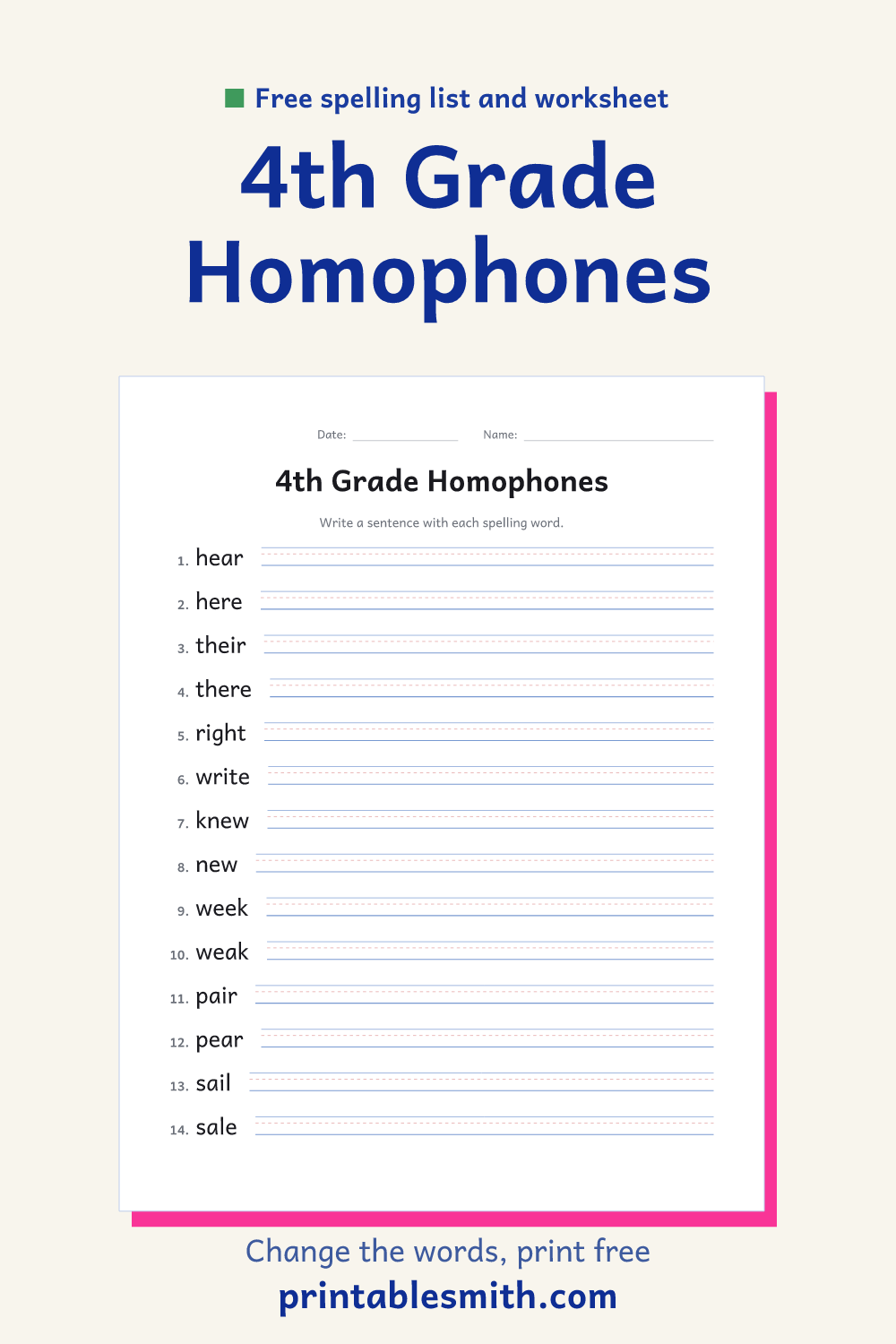
The words on this list
- hear
- here
- their
- there
- right
- write
- knew
- new
- week
- weak
- pair
- pear
- sail
- sale
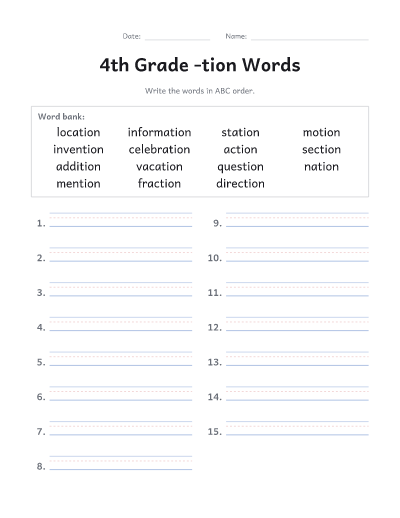
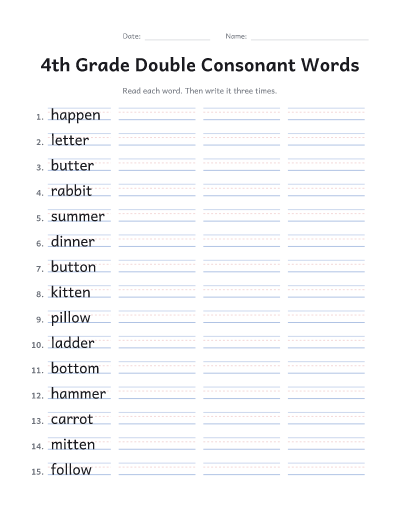
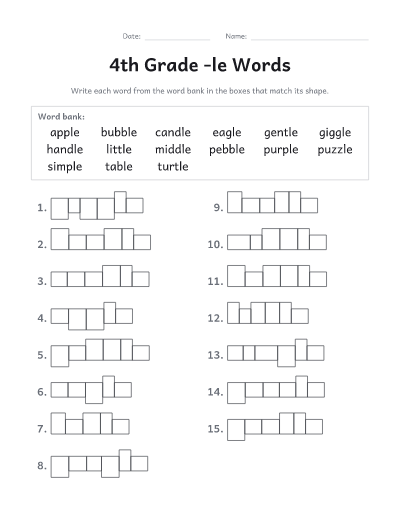
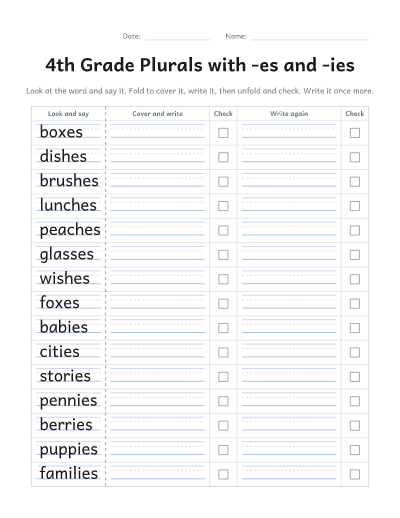
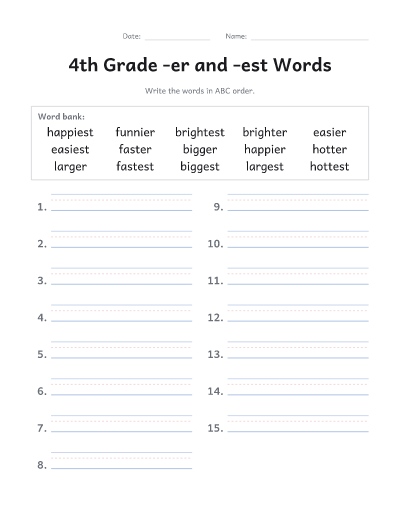
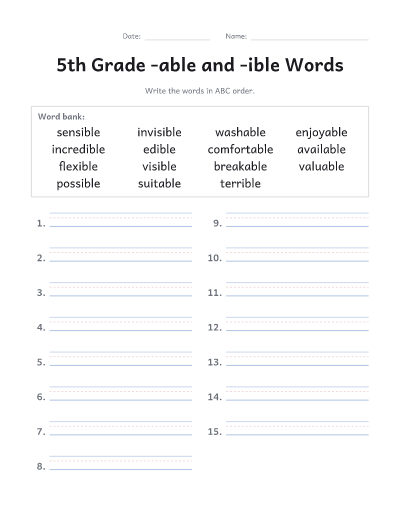
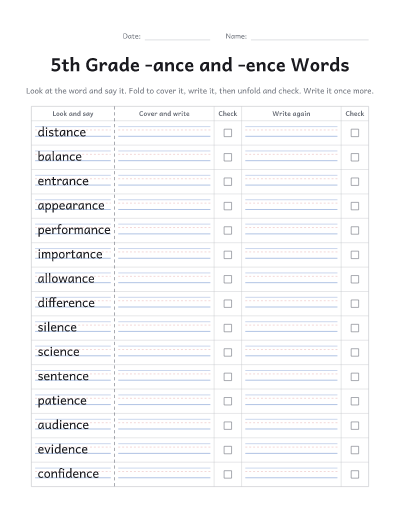
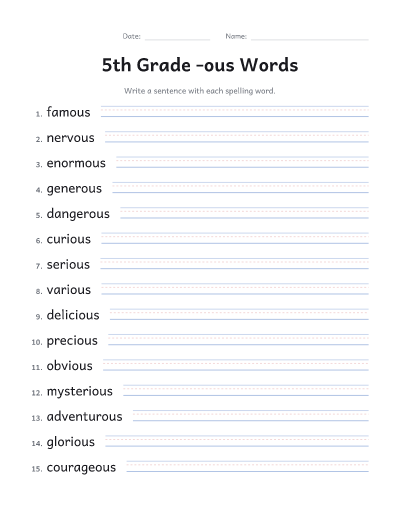
Any word can be changed above before you print, and the same list prints as any of the six sheets: a test, ABC order, word shapes and more.
Practicing these words all week? Make a spelling week from this list: a sheet for each school day, from a word search on Monday to a test on Friday.
How to spell homophones
Seven pairs of words that sound alike and are spelled differently. Sound cannot help at all; meaning decides. Children practice choosing the spelling from the sentence around it.
- Read or say the whole sentence first; the meaning tells you which word you need.
- Ask what the word is doing: naming a place (here, there), showing who owns something (their), or an action (hear, write).
- Use what you know about other words: knew goes with know, and write goes with wrote and writing.
- Check each one in a sentence of your own before the test.
A week with this list
- Monday: Talk through each pair, then start the Sentences sheet this page starts with.
- Tuesday: Finish the sentences and swap sheets; partners check that each homophone fits its meaning.
- Wednesday: Write a short note to a classmate that uses three of the pairs correctly.
- Thursday: Make a picture card for the hardest pair: a pear drawn on one card, a pair of socks on the other.
- Friday: Give the Spelling test with every word in a sentence; a homophone said alone cannot be marked.
Mistakes to watch for
- Their for there. The most common one in fourth grade writing. Their means belonging to them; there is a place, and it has here inside it.
- One spelling for both words. Some children write right for both right and write. Give each pair a sentence that needs both: “Write the right answer.”
- New for knew. Knew is the past of know, so it keeps the silent k. New is the opposite of old.
Ideas for using this list
- Ask children to explain the difference in each pair before they write.
- Give memory hooks: you hear with your ear, and here and there are both places.
- Read a sentence aloud with one of the words and ask which spelling fits.
Save it for later
Pin this sheet to find it again next time, or to share it with another teacher or parent. The link brings them straight to this page, ready to print.
Save to Pinterest