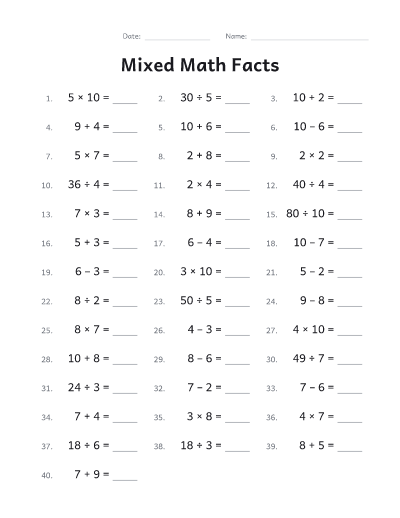
Mixed math facts
All four operations, numbers 2 to 10.
Free printable third grade math worksheets with answers, in teaching order. Each one makes a new sheet on every click, with the answer key in the PDF.
Forty facts with all four signs, numbers 2 to 10: multiplication and division beside the addition and subtraction they grow from. Answer page included.
All four operations, numbers 2 to 10.
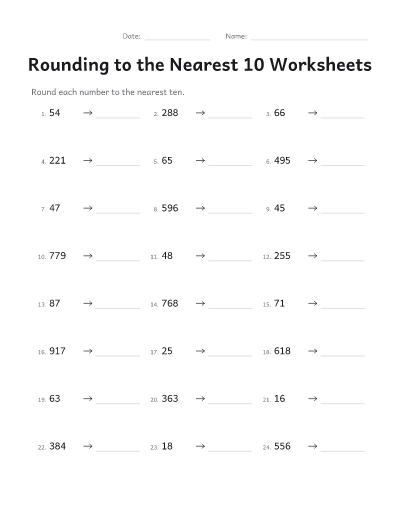
Up or down from the five.
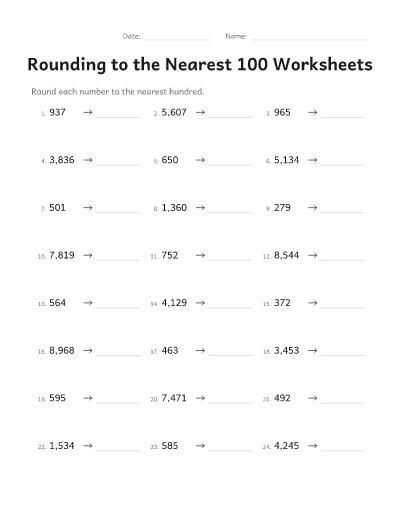
Look at the tens digit.
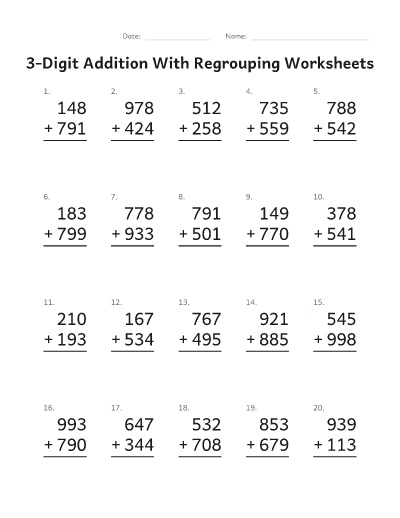
Carrying in one column or two.
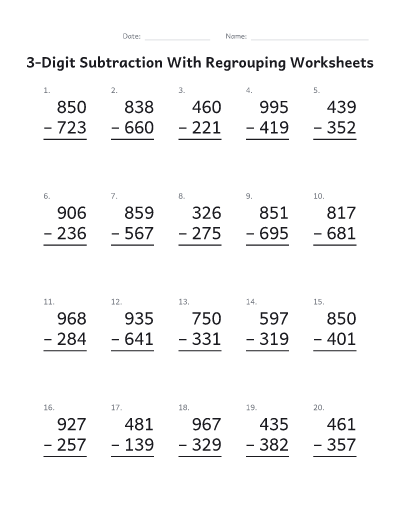
Borrowing in one column or two.
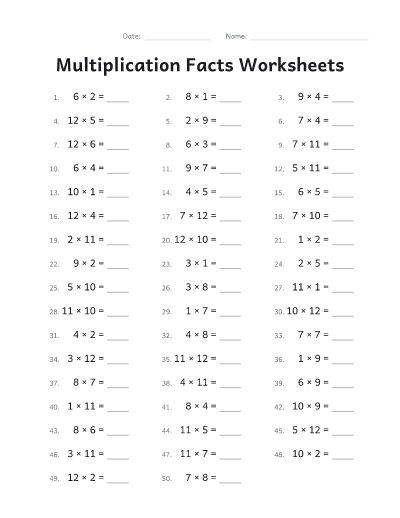
Fifty facts, every table 1 to 12.
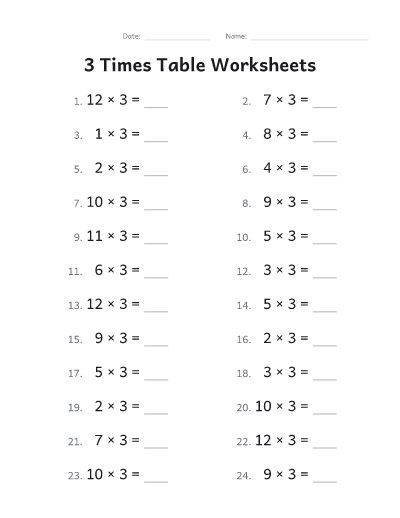
One table on a sheet.
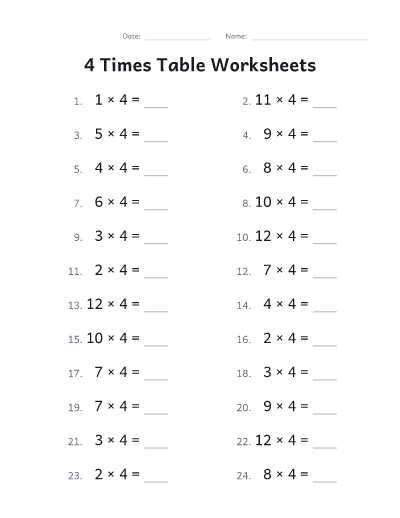
Double the 2s.
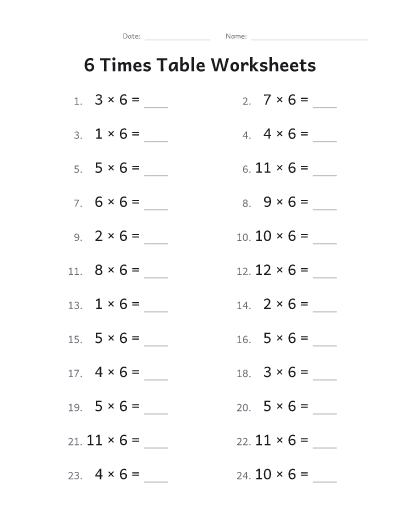
The 5s plus one more group.
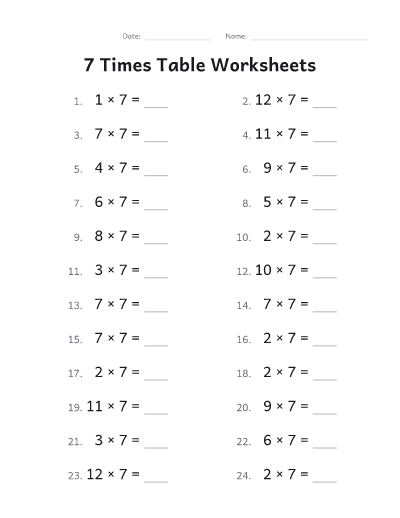
The slowest to stick.
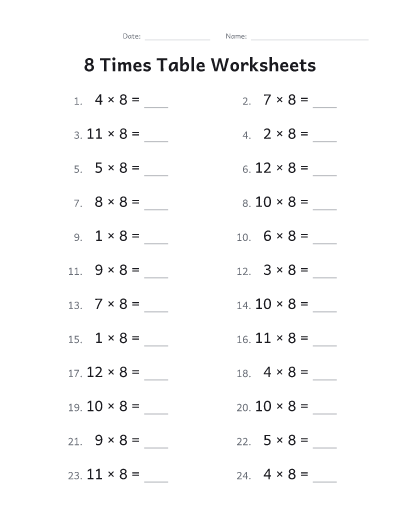
Double the 4s.
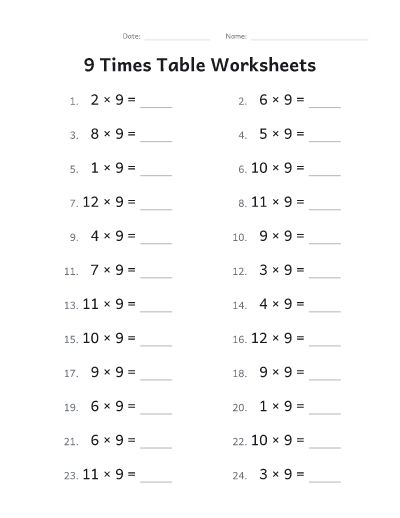
Up to 9 × 10, the digits add to nine.
Think of the times table.
Multiply and divide with one set of numbers.
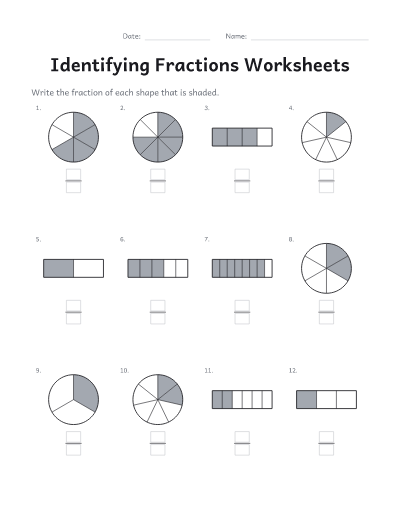
Write the fraction for each shape.
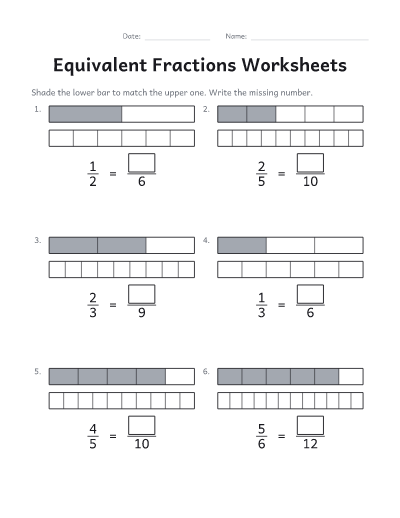
1/2 is 2/4.
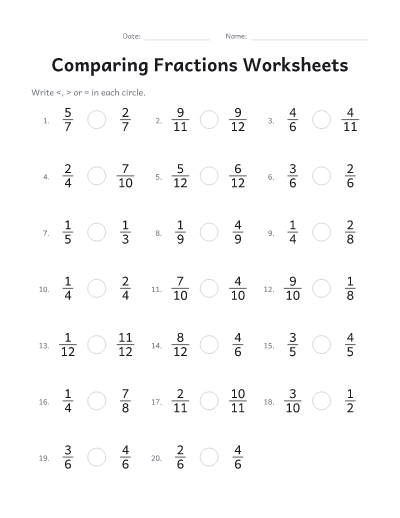
Which is greater?
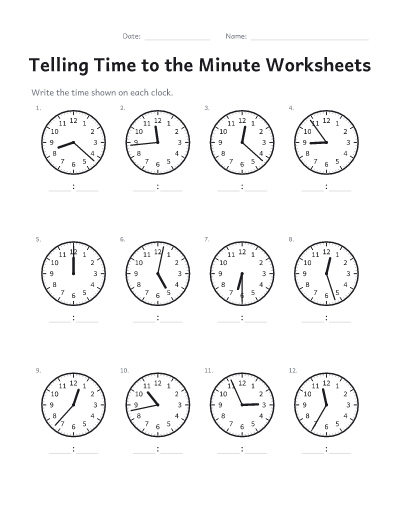
Every minute on the clock.
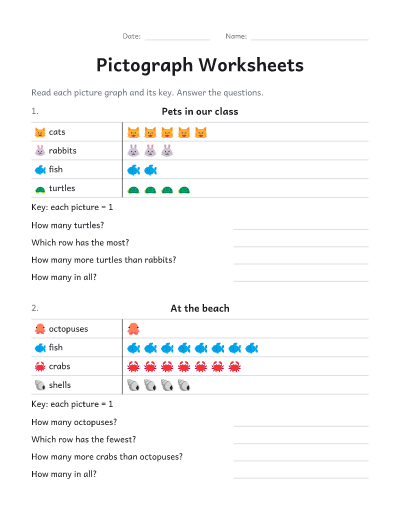
Read a picture graph, answer the questions.
Third graders round to estimate an answer before working it out, which catches a big slip. A number line makes the rule visible: 46 is nearer 50 than 40. Rounding to 100 looks at the tens digit.
Rounding to the nearest 10Rounding to the nearest 100Number line
The column method from second grade grows to three digits, with regrouping in more than one column. Subtracting across a zero, as in 402 – 168, is the step to slow down for.
3-digit addition with regrouping3-digit subtraction with regrouping
Multiplication and division take up the middle of the year. By June, the facts to 10 × 10 should come from memory.
Most classes learn the 2s, 5s and 10s first, then the 3s and 4s, then the 6s, 7s, 8s and 9s. One table a sheet, then the mixed facts sheet to check what has stuck. A multiplication chart on the desk is fine while learning; take it away for the mixed sheets.
2s5s10s3s4s6s7s8s9sAll the facts, mixedMultiplication chart
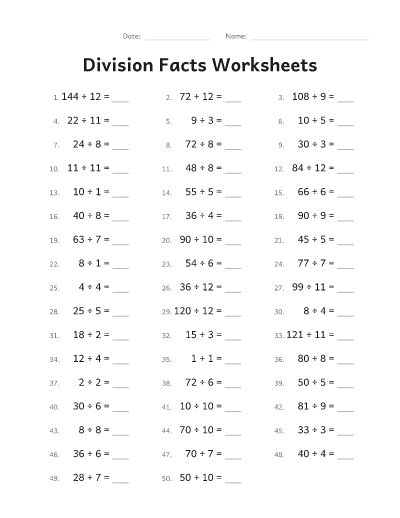
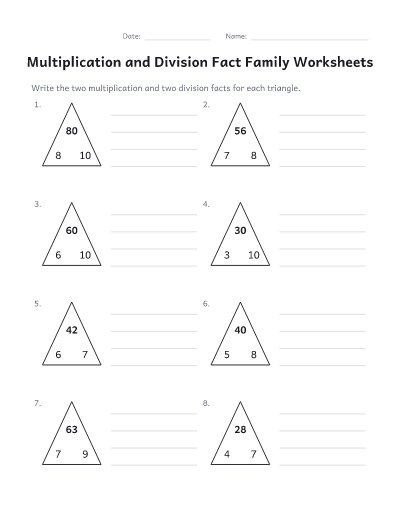
Third graders solve 24 ÷ 6 by asking what times 6 is 24. Fact families make the link explicit, and a division chart helps while the facts settle.
Division factsMultiplication and division fact familiesDivision chart
Third grade is when fractions become numbers: 3/4 is three of the 1/4 parts, and it has a place on a number line. Children find equal fractions with models, such as 2/4 and 1/2, and compare fractions with the same top or the same bottom number. The comparing sheet also mixes in pairs with different denominators, a step into fourth grade.
Identifying fractionsShading fractionsEquivalent fractionsComparing fractionsFraction strips
Read the clock to the exact minute. Elapsed time, how long from one time to another, is third grade work too, done on a clock or a number line. Drawing the hands, to five minutes, checks that the hour hand moves along as well.
Time to the minuteDraw the hands
In third grade one picture on a graph can stand for two or more things, so the key matters. Area starts by counting the squares that cover a shape; graph paper is the easiest way to draw them.
Picture graphsGraphs where one picture is 2Graph paper
By the end of third grade, most children know their multiplication and division facts to 10 × 10 from memory, add and subtract within 1,000, round to 10 and 100, understand fractions as numbers and compare simple ones, tell time to the minute and find area by counting squares. The facts are the part fourth grade leans on hardest.
Multiplication and division within 100, rounding, adding and subtracting within 1,000, fractions as numbers, time to the minute, area and graphs with a key.
Every multiplication fact to 10 × 10 and the division facts that go with them, by the end of the year, along with the addition and subtraction facts from earlier grades.
Most teachers use 2, 5 and 10 first, then 3 and 4, then 6, 7, 8 and 9, since each new table can lean on the ones before: 6 × 7 is 5 × 7 plus one more 7.
Halves, thirds, fourths, sixths and eighths. They name them, place them on a number line, find simple equal fractions and compare fractions with the same numerator or denominator.
The 6s, 7s and 8s, subtracting across zeros, and seeing fractions as numbers rather than shaded pictures. Daily fact practice helps the first two; fraction strips help the third.
Yes, every worksheet from the math maker does: the key prints after the sheet in the same PDF. Charts like the multiplication chart have nothing to answer.
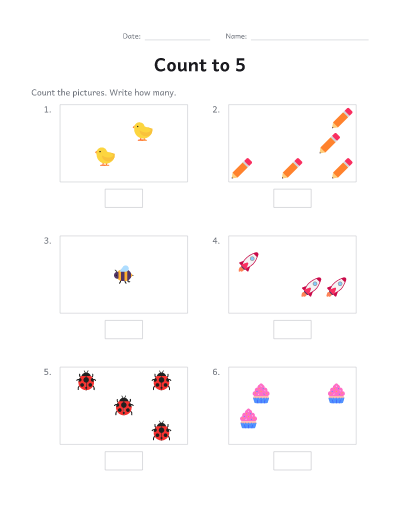
Count up to five pictures and write how many.
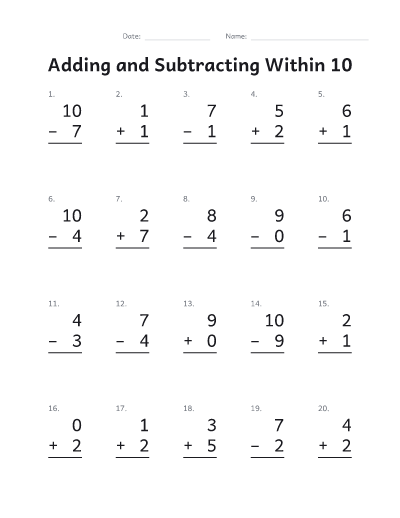
Plus and minus mixed, numbers to 10.
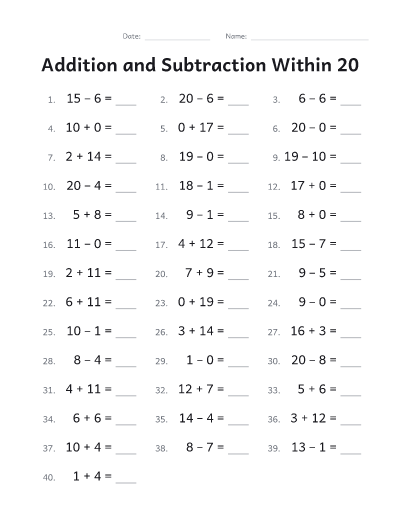
Plus and minus mixed, numbers to 20.
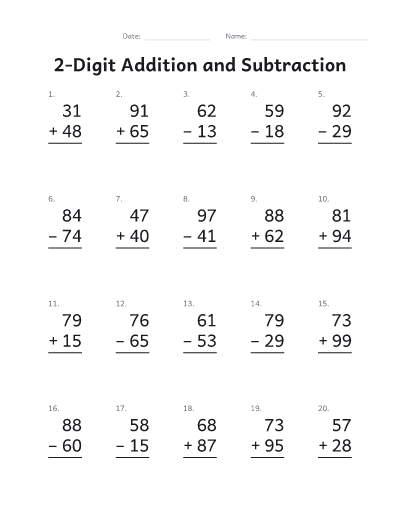
Mixed, some with regrouping.
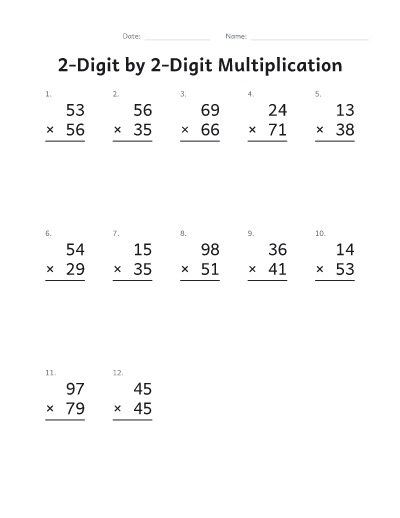
Twelve problems in columns.
Math worksheets by skill3rd grade spelling wordsMultiplication flash cards