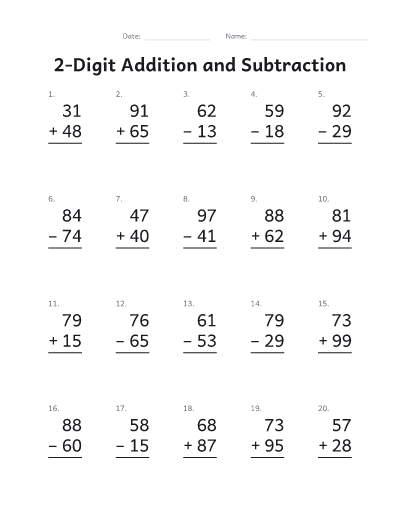
2-digit addition and subtraction
Mixed, some with regrouping.
Free printable second grade math worksheets with answer keys, in the order the year runs. Each sheet is new every time and prints as a PDF.
Twenty problems, adding and subtracting mixed, some with regrouping and some without, as a test mixes them. The answer key prints on page two.
Mixed, some with regrouping.
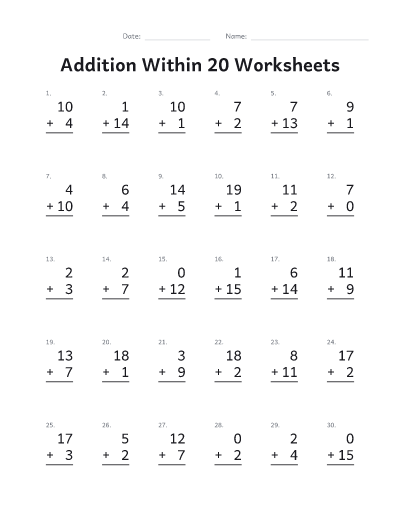
Facts to know from memory.
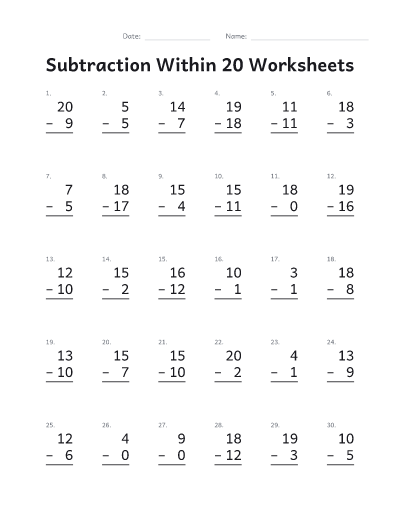
Quick facts, both ways.
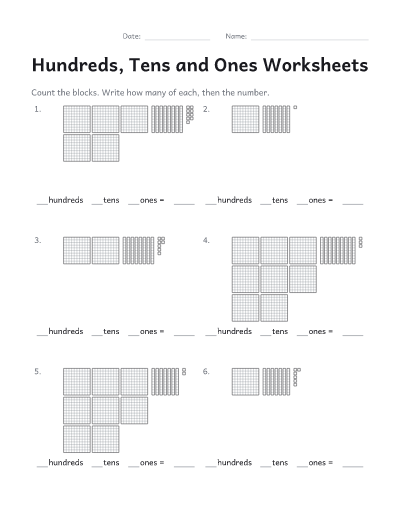
Three-digit numbers in blocks.
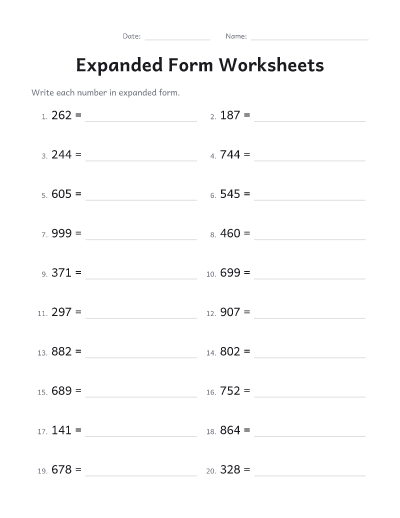
352 = 300 + 50 + 2.
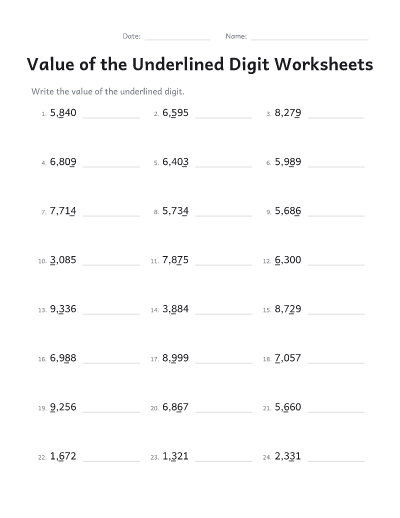
What is each digit worth, up to 4 digits?
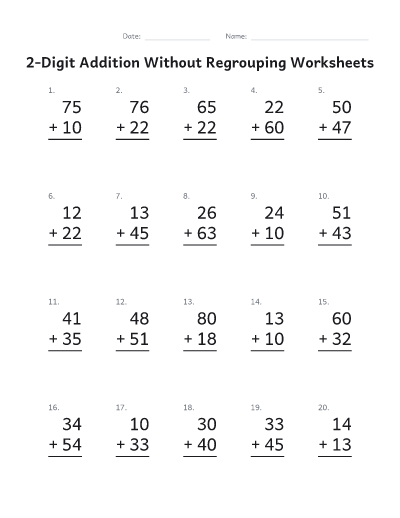
Column adding, step one.
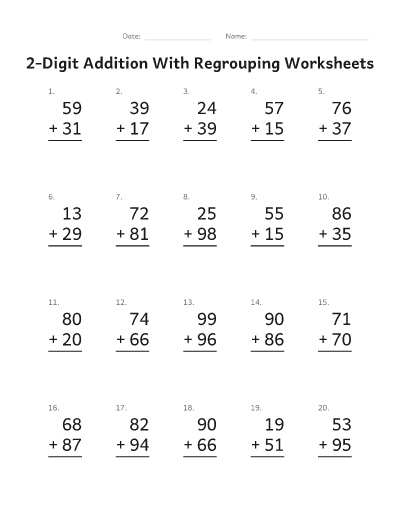
Carry the ten.
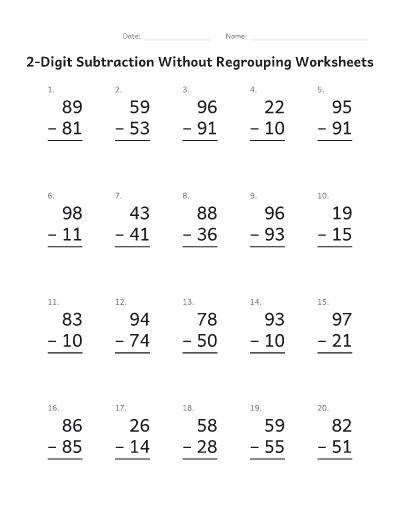
Ones from ones, tens from tens.
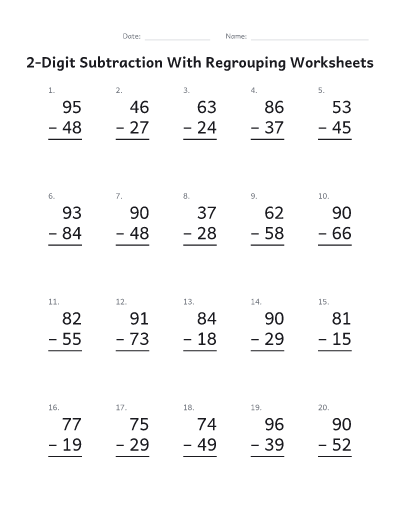
Borrow a ten.
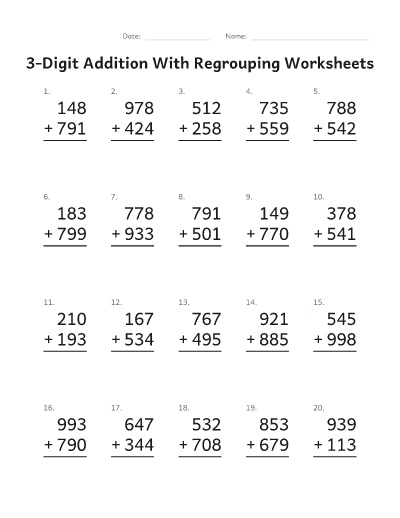
Hundreds join in.
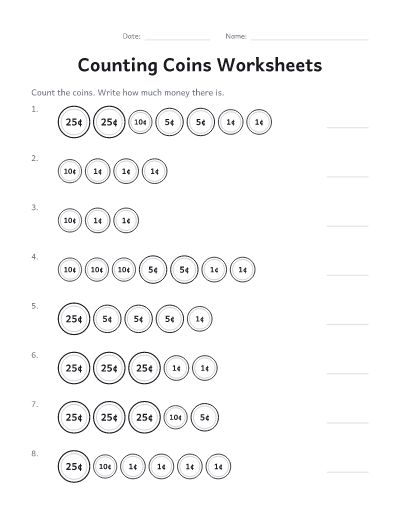
Mixed coins, totals under a dollar.
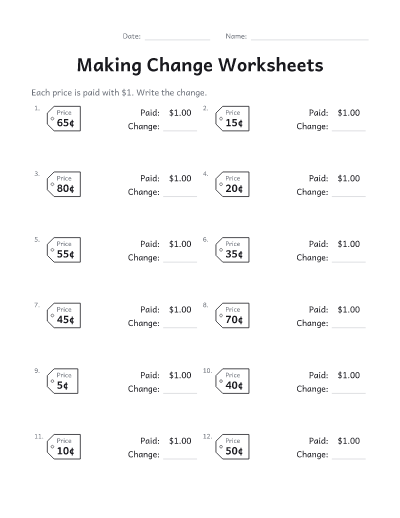
Change from a dollar.
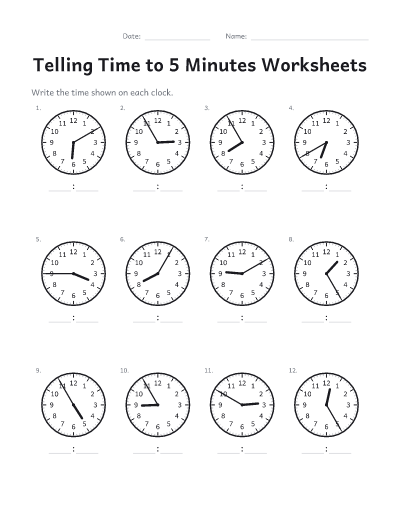
Count by fives around the clock.
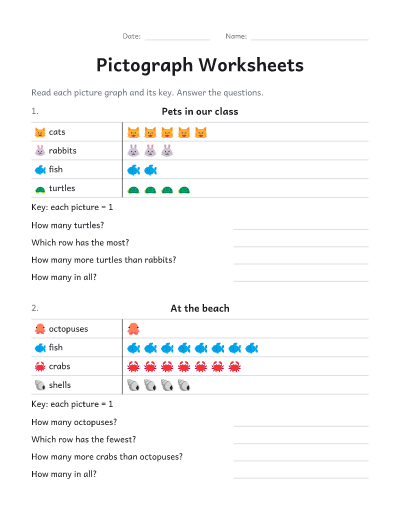
Read and answer.
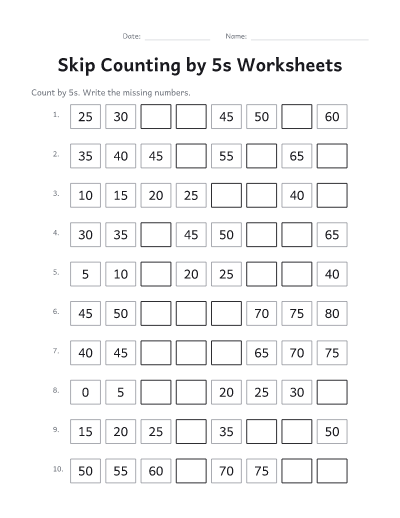
Fill the missing numbers.
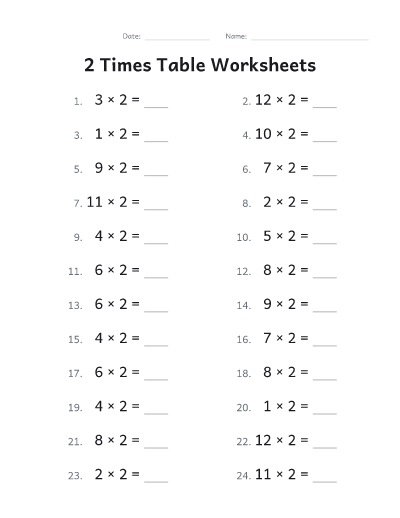
Equal groups, the first table.
Second grade is the year of column adding and subtracting. Facts within 20 come first, because every column in a 2-digit problem is one of them.
By the end of second grade, children are expected to know every sum of two one-digit numbers without counting. A child who stalls on 7 + 6 will stall in every column, so a few minutes of facts a day pays off all year.
Addition within 20Subtraction within 20Number bonds to 20Fact families within 20
Start with problems where no column goes past nine, so lining up tens under tens becomes a habit. Then carrying: 38 + 25 makes 13 ones, which is one ten and three ones. Borrowing follows and takes longer; most children need more sheets of it than of carrying.
Addition without regroupingAddition with regroupingSubtraction without regroupingSubtraction with regrouping
Toward the end of the year the same steps run across three columns. Second graders often use blocks or drawings here; written fluency with 3 digits is a third grade goal.
3-digit addition with regrouping3-digit subtraction with regrouping
The 3 in 352 means three hundreds. Children read numbers from blocks, write them in expanded form, name the value of one digit and compare two numbers by their hundreds first. Counting by 5s and 10s from any number belongs here too.
Hundreds, tens and onesExpanded formValue of the underlined digitCompare numbers to 1,000Skip counting by 10s
Second graders count mixed coins, starting with the largest, and solve problems with dollars and cents. Counting up from the price is the easiest way to make change.
Counting coinsCounting billsMaking change
The long hand counts by fives: at the 4 it is 20 minutes past. Quarter past and quarter to come first in many classes, then every five minutes, then drawing the hands.
Time to the quarter hourTime to 5 minutesDraw the hands
Second graders draw and read picture graphs and bar-style charts of up to four groups and answer how many more. Tally marks make the counting quick.
Rows of dots in an array and skip counting by 2s, 5s and 10s lead into the first times tables. Second graders do not need the tables by heart; seeing 3 rows of 5 as 15 is the goal.
Skip counting by 2sSkip counting by 5s2 times table5 times table10 times tableDot paper for arrays
Shapes split into equal parts, named and shaded. Second graders work with halves, thirds and fourths; these sheets also print sixths and eighths, which are third grade work, so set the largest denominator to 4 in the maker.
Shading fractionsIdentifying fractions
By the end of second grade, most children know their addition and subtraction facts within 20 from memory, add and subtract 2-digit numbers with regrouping, read and write numbers to 1,000, count money, tell time to five minutes and read simple graphs. Multiplication is a foundation still being laid.
Facts within 20, place value to 1,000, 2-digit addition and subtraction with regrouping, money, time to five minutes, graphs, equal groups, and halves, thirds and fourths.
Carrying usually starts in the fall or winter, once 2-digit adding without regrouping is solid; borrowing follows a few weeks later. Both are second grade goals by spring.
Borrowing, above all subtracting from a zero, as in 40 – 17, and lining up columns. Slow facts make both harder, so mix a little fact practice into every week.
They learn what it means, with arrays, equal groups and skip counting, and may start the 2s, 5s and 10s. Knowing the tables by heart is a third grade goal.
Yes. Each worksheet ends with its answer key in the same PDF, the regrouping sheets included.
It is a big year: regrouping and place value to 1,000 are new, and both build on fast facts. Children who struggle often need more fact practice rather than more regrouping sheets.
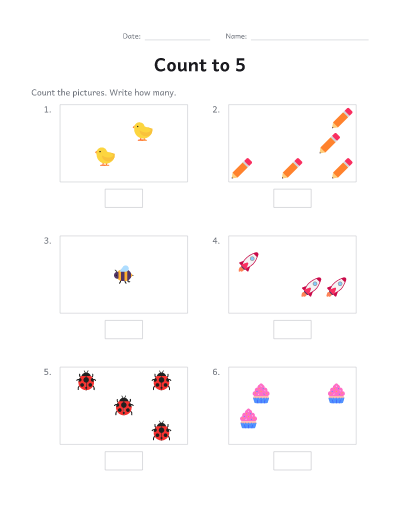
Count up to five pictures and write how many.
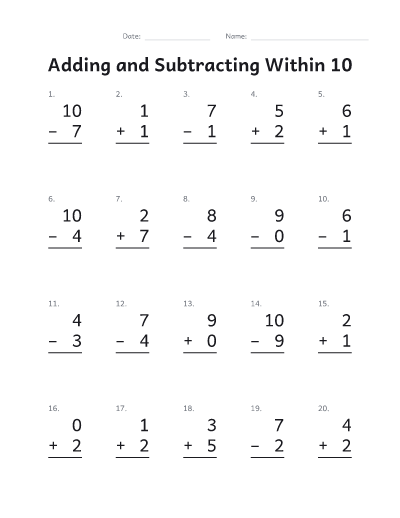
Plus and minus mixed, numbers to 10.
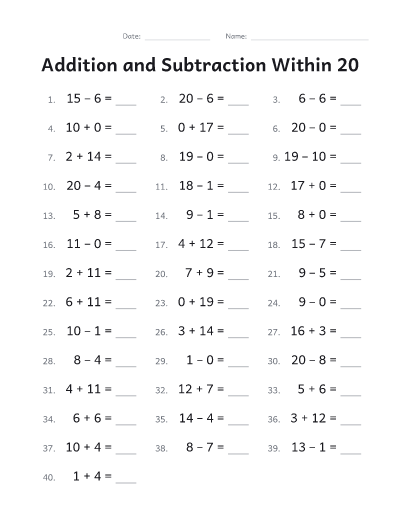
Plus and minus mixed, numbers to 20.
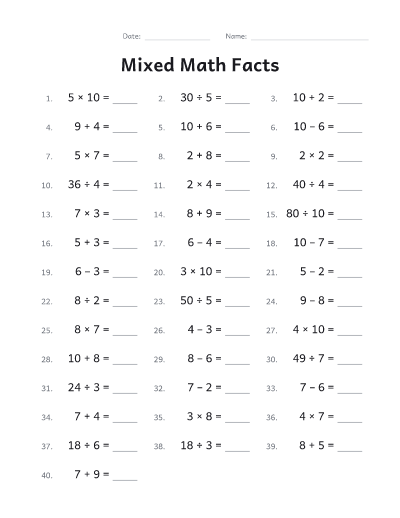
All four operations, numbers 2 to 10.
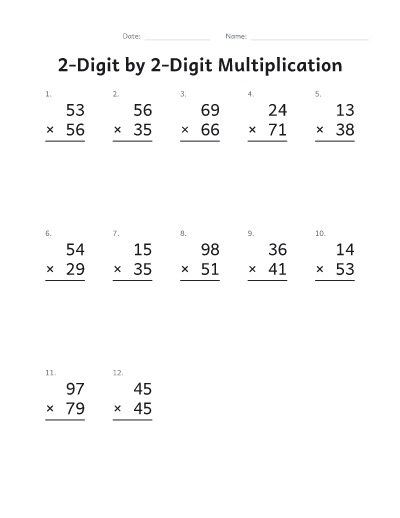
Twelve problems in columns.
Math worksheets by skill2nd grade spelling words2nd grade heart words