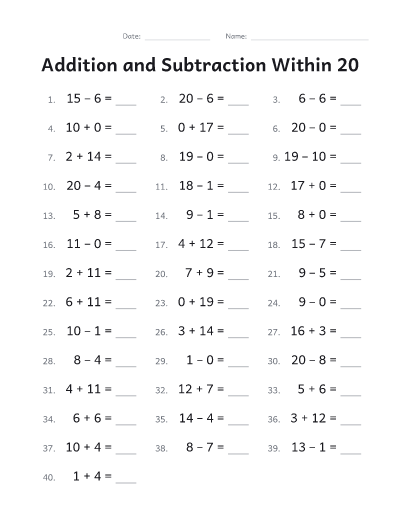
Addition and subtraction within 20
Plus and minus mixed, numbers to 20.
Free printable first grade math worksheets with answers, from facts within 10 in the fall to adding tens in the spring. Make a new sheet each time, with its answer key in the PDF.
Forty problems with plus and minus mixed, the facts first graders work toward all year, and an answer page.
Plus and minus mixed, numbers to 20.
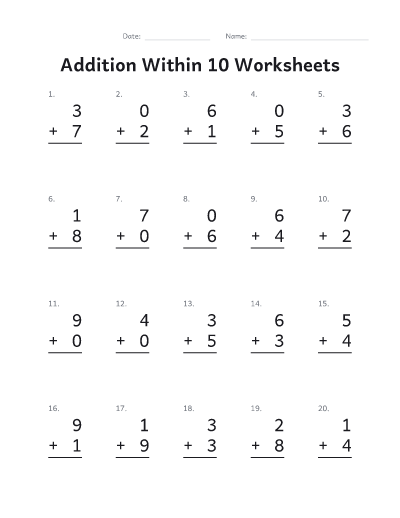
The facts to know by heart first.
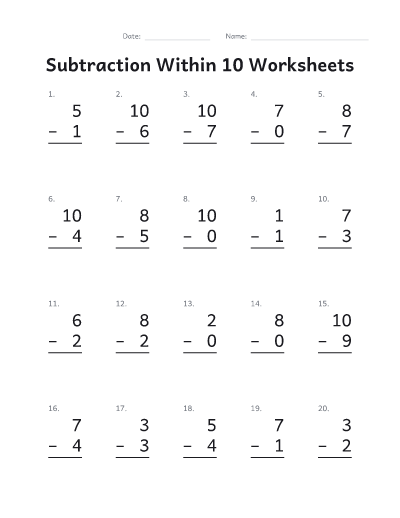
Take away, and think addition.
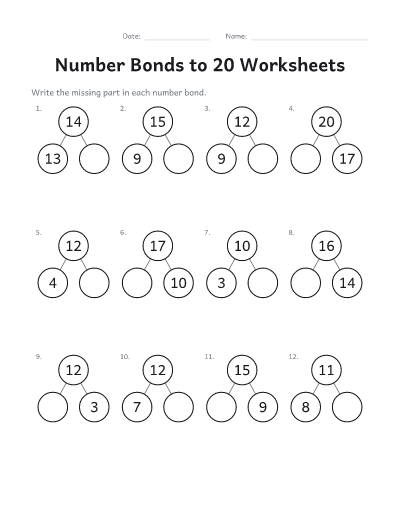
Parts and wholes past ten.
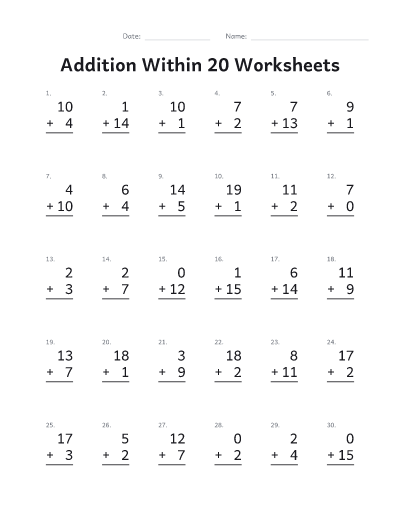
Make ten to add 8 + 5.
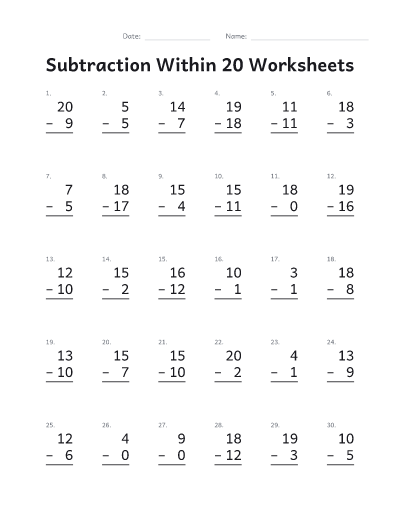
Back to ten to take 13 – 5.
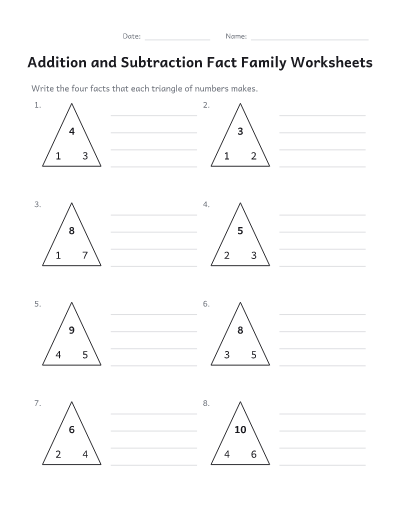
Three numbers, four facts.
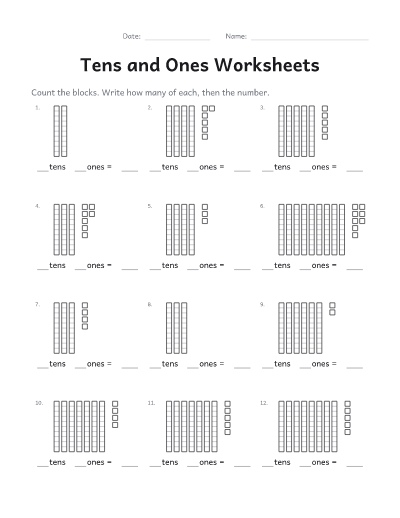
Base-ten blocks to count and write.
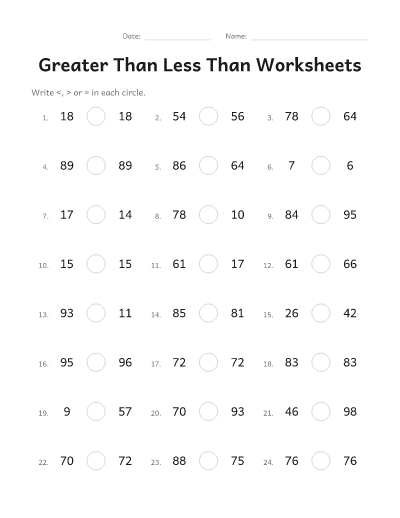
Compare with > and <.
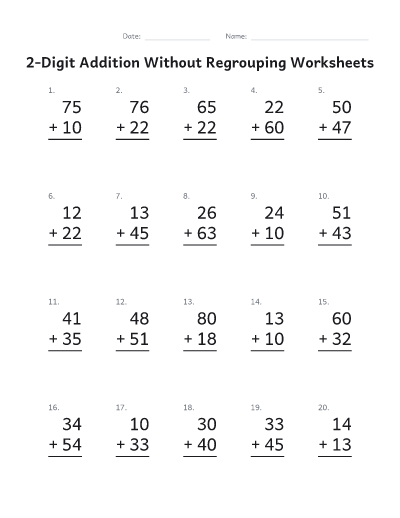
Add tens to tens, ones to ones.
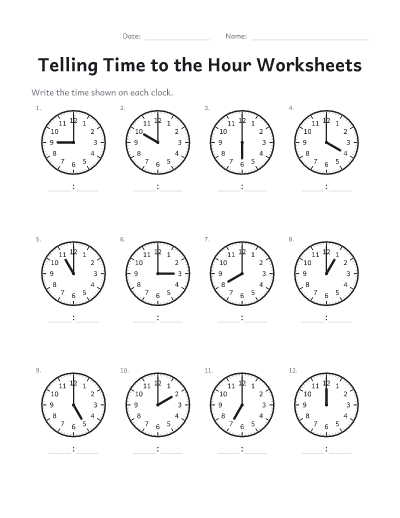
Read o'clock.
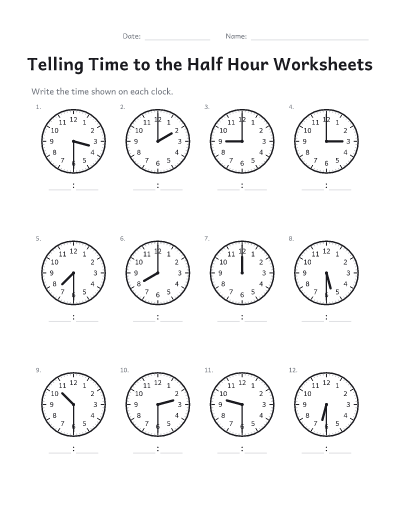
Half past on the clock.
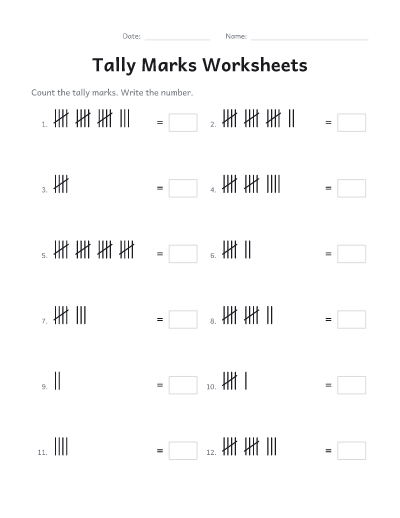
Count the tally marks.
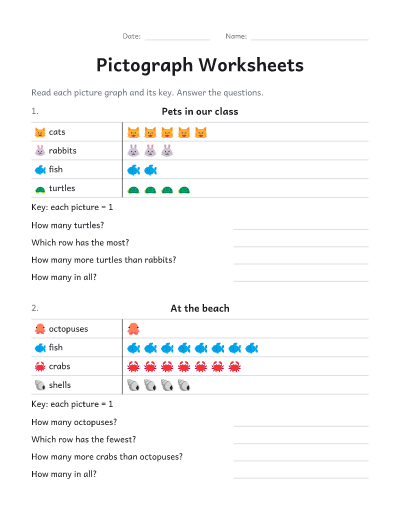
Count pictures in rows, answer questions.
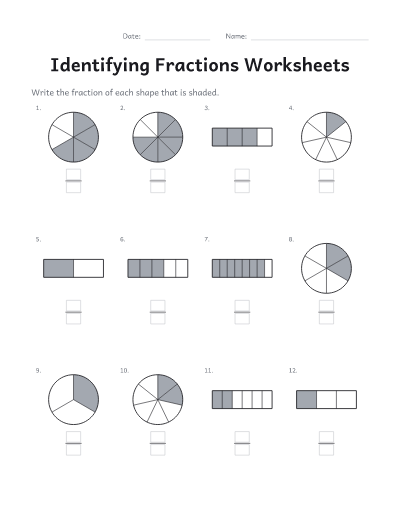
Halves to eighths: name the shaded part.
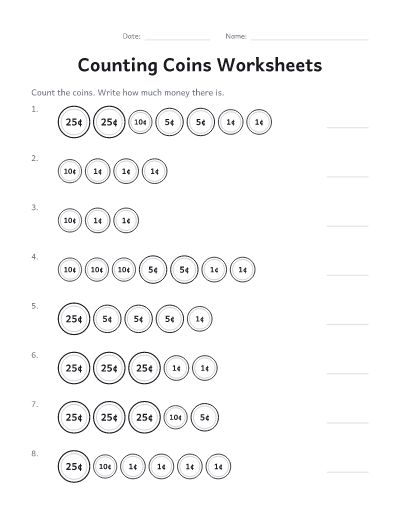
Pennies, nickels, dimes, quarters.
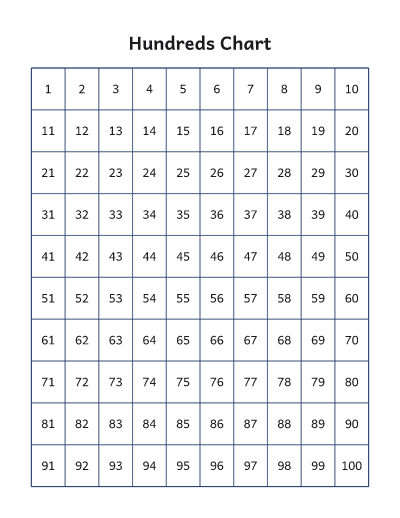
Set it to 1 to 120 to count past 100.
Addition and subtraction fill most of the first grade year, from facts within 10 in the fall to adding 2-digit numbers by spring.
First grade starts by making the kindergarten facts quick. A child who still counts all of 6 + 3 on fingers is ready for counting on from 6. Number bonds to 10 keep the pairs in view.
Addition within 10Subtraction within 10Number bonds to 10
For 8 + 5, take 2 from the 5 to make 8 into 10, then add the 3 left: 13. Ten frames with 11 to 20 dots show why it works. Subtraction goes the other way, 13 – 5 is 13 – 3 – 2. Fact families tie each pair of facts together.
Ten frames 11 to 20Number bonds to 20Addition within 20Subtraction within 20Fact families
Late in the year, first graders add a 2-digit number and a 1-digit number, and add or take away tens: 40 + 30, 56 + 20. The 2-digit sheets without regrouping are a step toward second grade: every column stays under ten, so the place value idea comes first.
2-digit addition without regrouping2-digit subtraction without regroupingNumber line
First graders count, read and write numbers to 120, starting from any number, and learn that the 4 in 47 means four tens. The 120 chart shows the pattern down each column; base-ten blocks show it in a picture.
Hundreds chart (set it to 120)Counting by 10sCounting by 5sTens and ones
To compare 61 and 59, look at the tens first. The greater than, less than sheet uses the > and < signs, which many first graders remember as a mouth that eats the bigger number.
Children read the short hand first, then learn that at half past the short hand sits between two numbers, which is where most mistakes come from.
Time to the hourTime to the half hour
First graders sort, count and compare with tally marks and simple picture graphs. They also cut circles and rectangles into halves and fourths and learn that equal parts must be the same size.
Tally marksPicture graphsIdentifying fractionsShading fractions
Many schools teach coin names and values in first grade, and counting mixed coins in second. Pennies and dimes are the easiest start, since they match ones and tens; the sheet mixes all four coins once those are known.
By the end of first grade, most children add and subtract within 20 using strategies, with the facts within 10 quick from memory. They count to 120, know tens and ones, add a 2-digit number and a 1-digit number, tell time to the half hour, and split shapes into halves and fourths. Regrouping (carrying) usually waits for second grade.
Addition and subtraction within 20, counting to 120, tens and ones, comparing 2-digit numbers, time to the half hour, simple graphs, and halves and fourths. Many schools add coins.
Most 7-year-olds are in first or second grade: addition and subtraction facts within 20, place value to 100 or more, and telling time to the half hour or closer. Second grade adds regrouping.
Usually not on paper. First graders add a 2-digit and a 1-digit number with blocks or drawings, and may make a new ten, but written carrying in columns is a second grade skill.
Yes. The review sheet at the top of this page mixes both within 20, so children must read the sign on every problem. Fact families also put both on one page.
Yes. Every worksheet from the math maker prints its answer key after the sheet in the same PDF, and a new sheet comes with its own key.
For most children the hard part is moving from counting on fingers to knowing facts, and the jump past ten. Short daily practice, five minutes, helps more than a long weekly session.
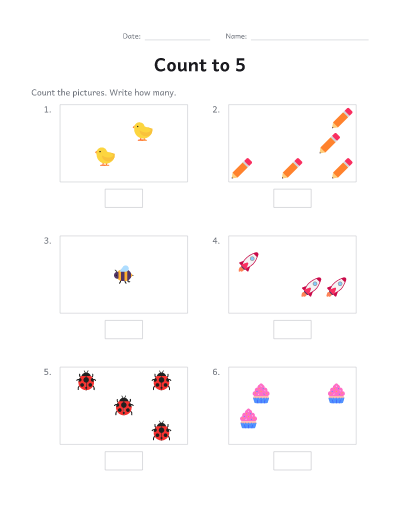
Count up to five pictures and write how many.
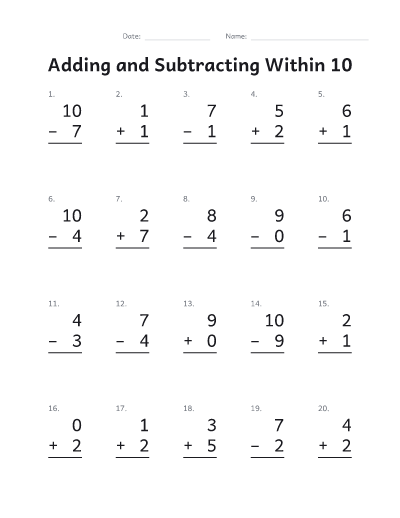
Plus and minus mixed, numbers to 10.
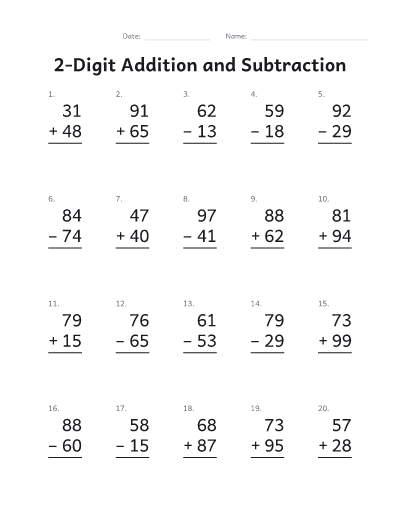
Mixed, some with regrouping.
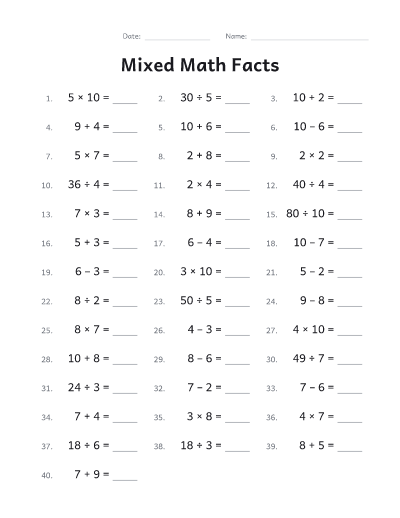
All four operations, numbers 2 to 10.
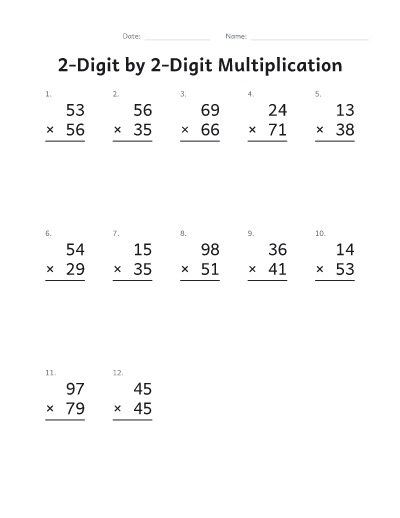
Twelve problems in columns.
Math worksheets by skill1st grade spelling words1st grade heart words