How to count objects
- Touch or mark each picture once, saying one number for each.
- Keep the numbers in order: 1, 2, 3, never skipping or saying one twice.
- The last number said tells how many there are.
- Write that number in the box, or circle it.
Once counting to 20 is steady, run a finger along the first two rows of a hundreds chart to show where the numbers go next.
A worked example
Count 7 strawberries
- Touch the first strawberry and say “one”.
- Keep going, one number for each, crossing them off: two, three, four, five, six, seven.
- The last number was seven, so there are 7 strawberries.
Common mistakes
- Counting the same picture twice. Mark each picture as it is counted, or count from left to right along the top row first.
- Saying the numbers faster than pointing. Slow the finger down: one touch, one number. Tapping the table with each number helps.
- Counting again when asked how many. Ask “So how many are there?” right after the count, until the last number said becomes the answer.
Which grade it suits
Kindergarten, where US standards ask children to count up to 20 objects and to answer “how many?” with the last number counted. Preschool counts to 5 and then 10, and first grade moves on to counting to 120.
Ideas for using these sheets
- Before the sheet, count real things into a cup: six crayons, one at a time, then tip them out and count again.
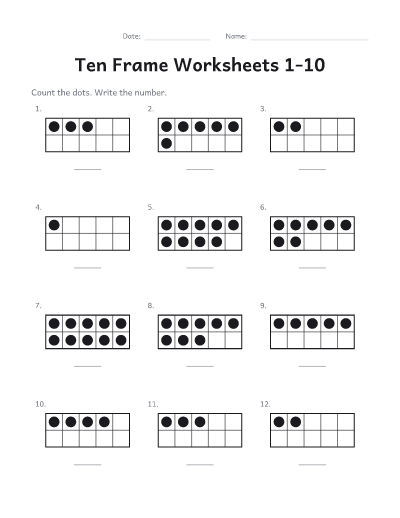
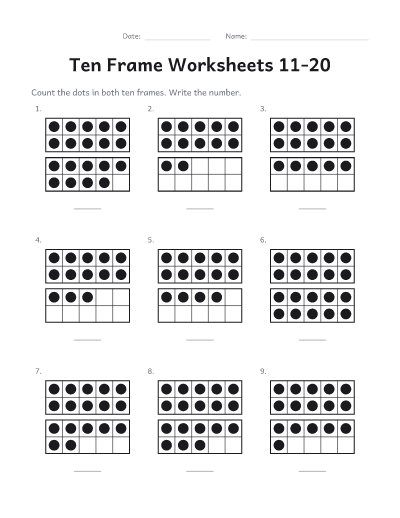
- Give children counting 11 to 20 two ten frames and a pile of counters: one counter for each picture, the first frame filled before the second, so 14 shows as ten and 4 more.
- Print the black and white pictures and let children color each one as they count it.
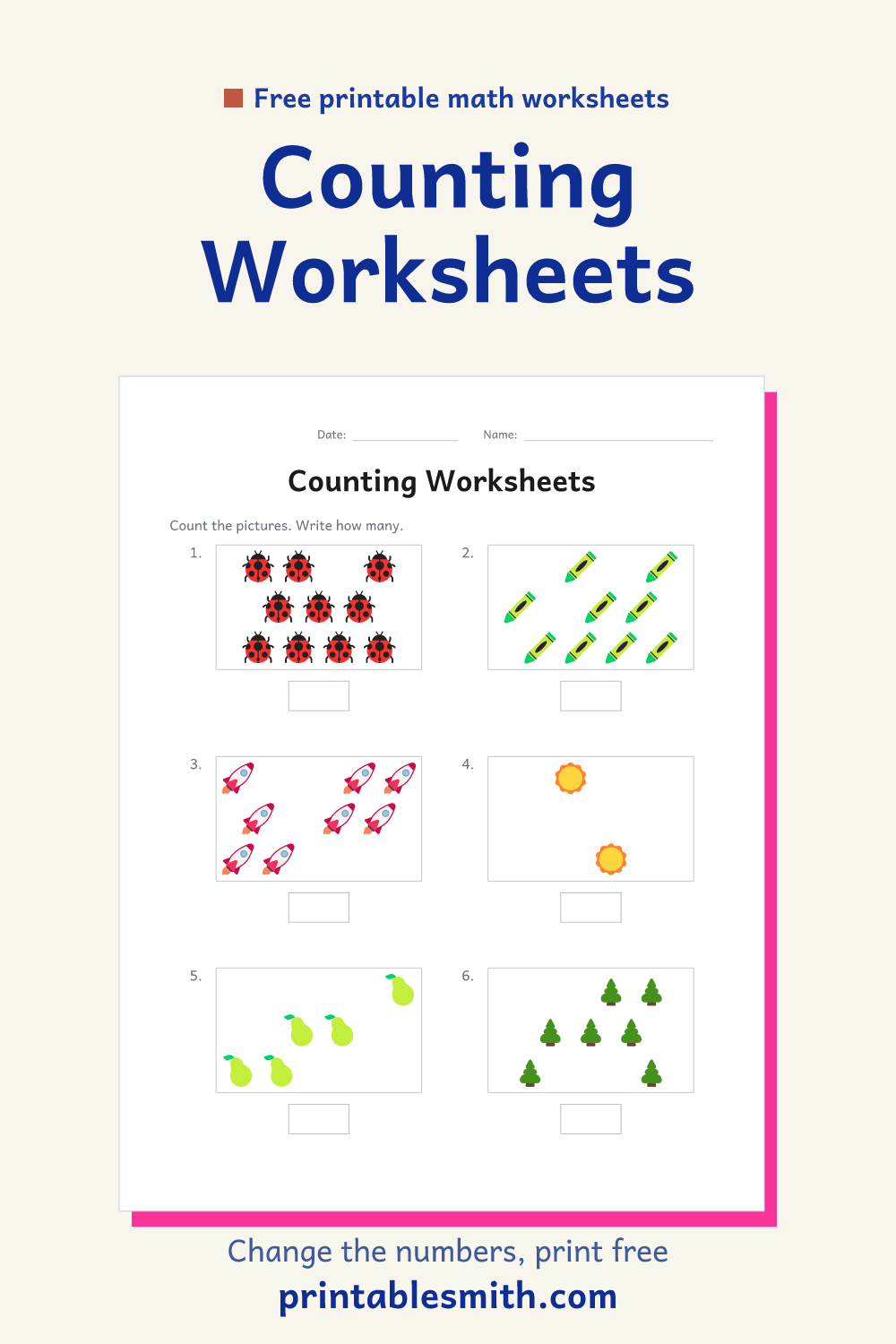
Every setting can be changed above before you print, and “New problems” makes a fresh sheet as often as you like.
Save it for later
Pin this sheet to find it again next time, or to share it with another teacher or parent. The link brings them straight to this page, ready to print.
Save to Pinterest