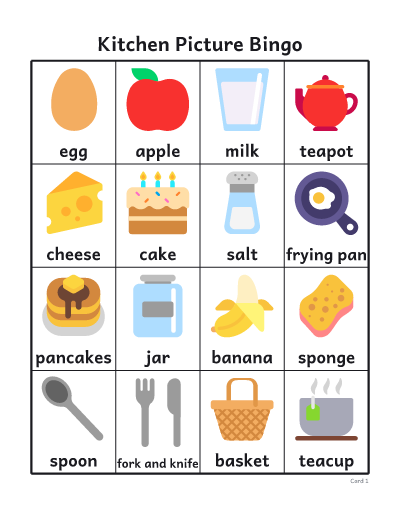
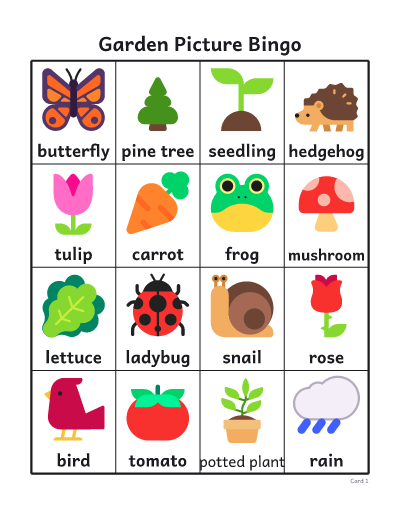
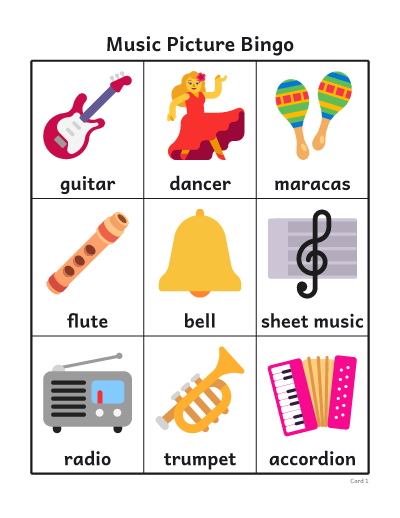
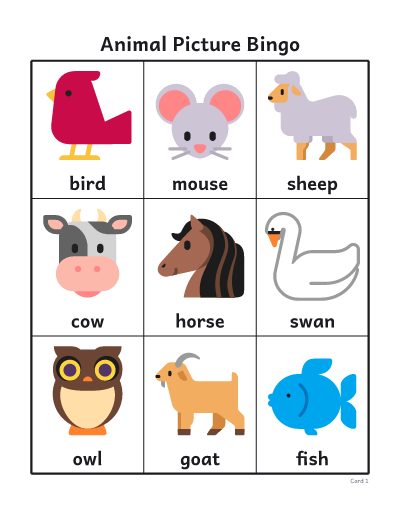
Pictures on the cards
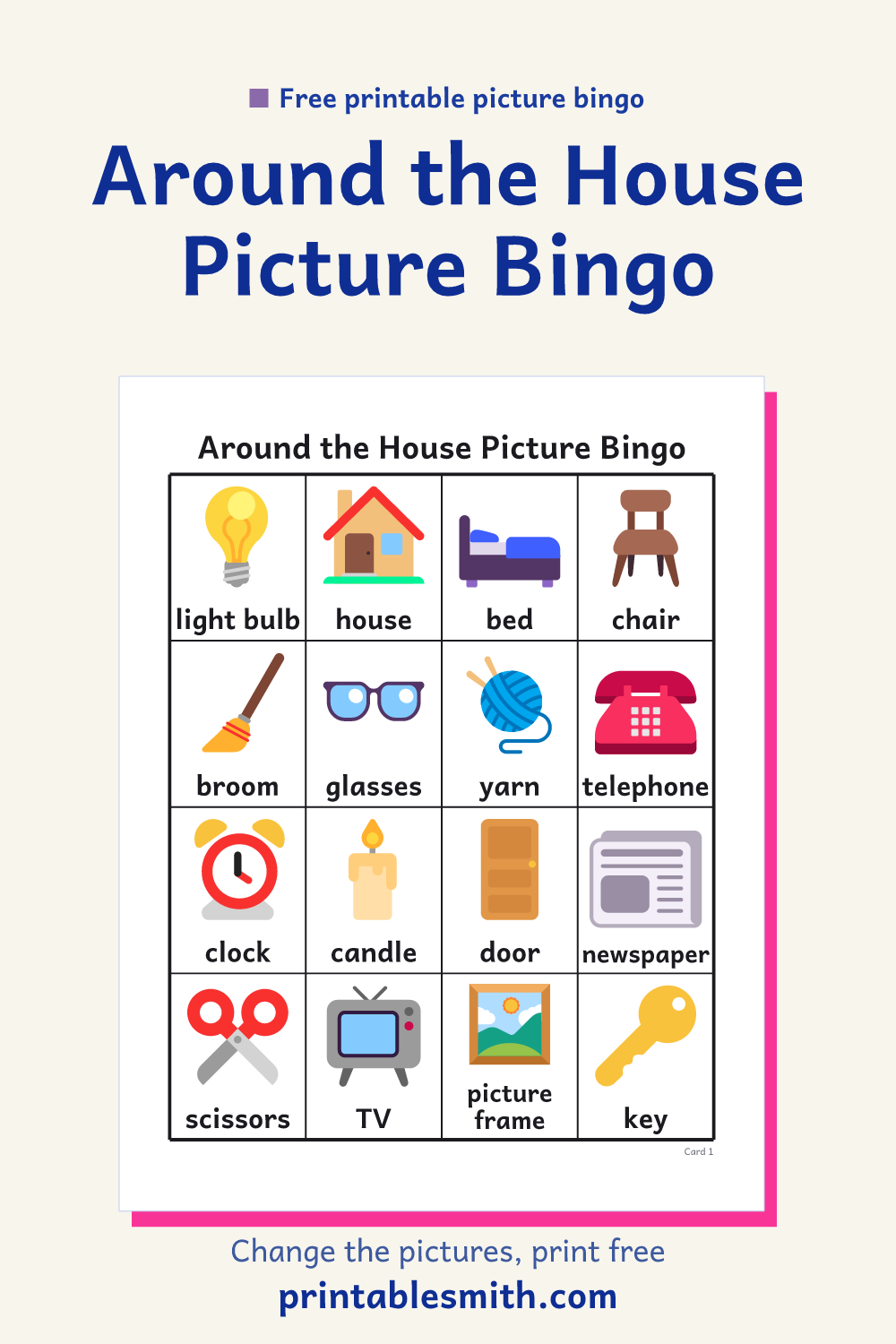
 house
 door
 window
 key
 bed
 chair
 couch
 mirror
 clock
 telephone
 TV
 light bulb
 broom
 candle
 books
 scissors
 glasses
 picture frame
 yarn
 newspaper
Swap any picture, change the grid or the number of cards, and print as many as you need.
Who this game suits
Things players have handled every day of their lives: a key, a broom, a pair of glasses, the morning paper. It is the game to choose when a group often talks about the homes they lived in. A 4 × 4 round runs about twenty minutes, and the game works as well for two at a kitchen table as for a room of twelve.
Running the game with a group
- Before the first call, read all twenty names aloud once, so every picture has been heard before the game begins.
- Call at an easy pace, and carry the calling card around the tables for anyone sitting farther back.
- Check each bingo by asking the winner to name their pictures, with the room helping out if a word is slow to come.
Calling these pictures
- A few pictures can be mixed up at a glance: the clock and the picture frame, the candle and the light bulb. Add a word that sets each apart: the clock with its hands, the frame with a photo inside, the candle with its flame, the bulb in the lamp.
- Ask a short question with a call now and then, “the telephone: whose number do you still know by heart?”, then carry on.
- For the newspaper and the books, name what was read in each: the morning paper with breakfast, a favorite story at bedtime.
Ideas for this game
- Call each picture with the room it belongs in, “the key, by the front door”, so players can picture the house as they look.
- After the game, ask everyone which room of their first home they remember best.
- Pass a ball of yarn or a picture frame around while the game is on, for something to hold.
How these cards are made
- Big pictures is already on: one card to a page, with the pictures as large as the page allows and each name printed in bold of 18 points or more beneath it.
- There is no free space, so every square is a real picture to find. Turn it back on under “More” if your group likes a head start on a 3 × 3 card.
- The calling cards come last, three across, big enough to hold up to the room. Cut them out and draw them from a basket, or keep the page whole as a checklist.
- Choose black and white to save ink: the pictures print as bold outlines that stay clear on any printer, and players can color them in another day.
Tips for activity directors and families
- Call slowly, say each name twice and hold up the calling card, so players can follow by sight as well as by ear.
- Use large markers that are easy to pick up and too big to swallow, such as squares of colored cardboard, or let players cross squares out with a thick felt-tip pen.
- Play for a full card rather than a line when the group likes a longer, gentler game.
- Let a player draw the calling cards and show them around; many enjoy being the caller.
- Keep a few spare cards printed, so anyone who joins late can still play.
Save it for later
Pin this sheet to find it again next time, or to share it with another teacher or parent. The link brings them straight to this page, ready to print.
Save to Pinterest