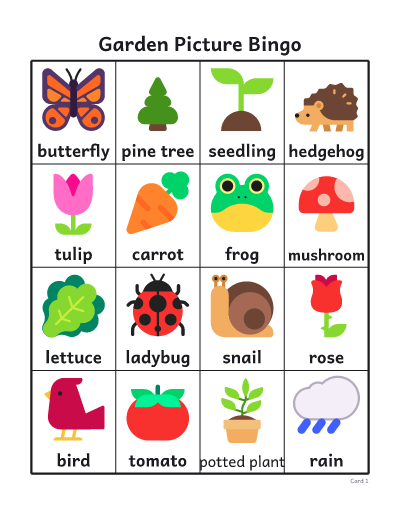
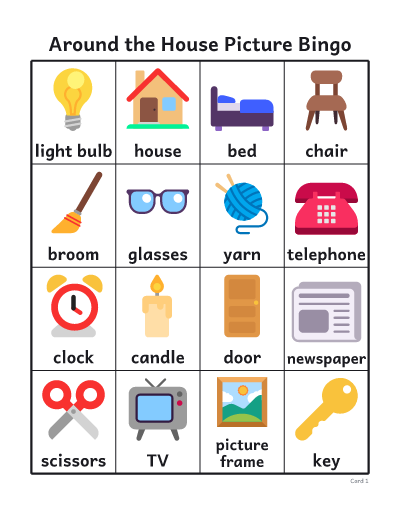
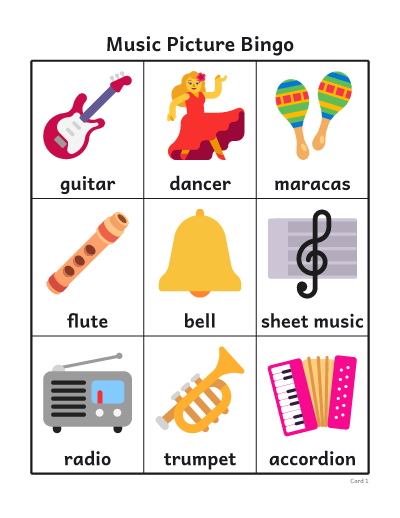
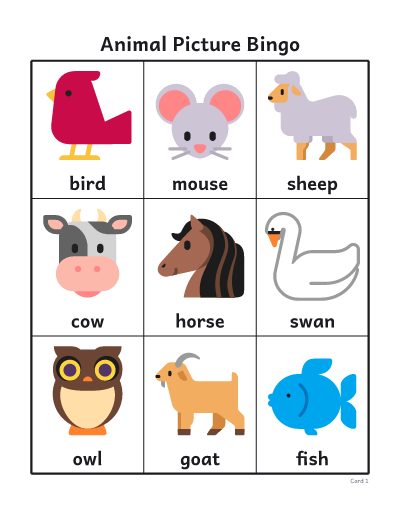
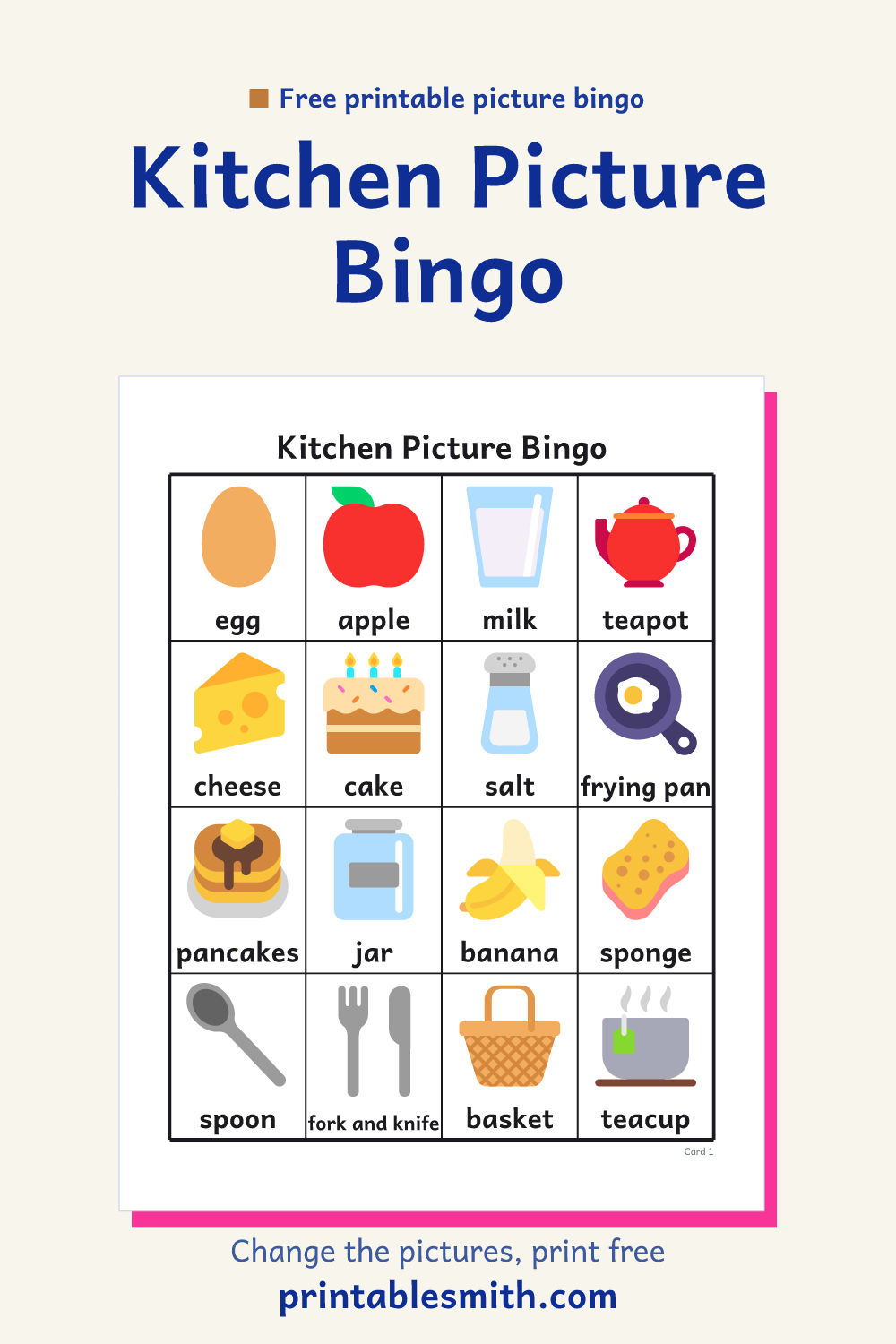
Pictures on the cards
 teapot
 teacup
 spoon
 fork and knife
 frying pan
 salt
 jar
 basket
 sponge
 bread
 cheese
 egg
 milk
 honey
 pie
 cake
 cookie
 pancakes
 apple
 banana
Swap any picture, change the grid or the number of cards, and print as many as you need.
Who this game suits
A good first game for a new group: everyone has stood at a stove or set a table, so no picture needs explaining. Each 4 × 4 card holds sixteen of the twenty pictures, which makes a game of about twenty minutes at a gentle pace. It suits a table of six to ten players just before or after a meal, when talk of food comes easily.
Running the game with a group
- Print one card for each player and one set of calling cards: ten players need ten card pages and the calling pages at the end.
- Seat players where they can all see the caller’s hands, and put a dish of large markers within reach of each one.
- Call the first five pictures slowly to settle the room, then keep a steady pace of about one call every half minute.
- When someone calls bingo, read their four pictures back aloud and let the table check them together.
Calling these pictures
- Say what each thing is for as well as its name: “the teapot, for a hot cup of tea”, “the honey, for warm toast”.
- The sponge, the jar and the basket are plainer than the food pictures. Hold those calling cards up a little longer.
- When the pancakes or the pie come up, ask who made them best in their family, and give the table a moment to answer.
Ideas for this game
- When a picture is called, ask what the group used to cook in it or serve with it. A frying pan often brings back a whole Sunday breakfast.
- Set out a real teacup, spoon and jar on the table, and hold up the real thing as you call it.
- Finish the session with tea and a cookie, two of the pictures on the cards.
How these cards are made
- Big pictures is already on: one card to a page, with the pictures as large as the page allows and each name printed in bold of 18 points or more beneath it.
- There is no free space, so every square is a real picture to find. Turn it back on under “More” if your group likes a head start on a 3 × 3 card.
- The calling cards come last, three across, big enough to hold up to the room. Cut them out and draw them from a basket, or keep the page whole as a checklist.
- Choose black and white to save ink: the pictures print as bold outlines that stay clear on any printer, and players can color them in another day.
Tips for activity directors and families
- Call slowly, say each name twice and hold up the calling card, so players can follow by sight as well as by ear.
- Use large markers that are easy to pick up and too big to swallow, such as squares of colored cardboard, or let players cross squares out with a thick felt-tip pen.
- Play for a full card rather than a line when the group likes a longer, gentler game.
- Let a player draw the calling cards and show them around; many enjoy being the caller.
- Keep a few spare cards printed, so anyone who joins late can still play.
Save it for later
Pin this sheet to find it again next time, or to share it with another teacher or parent. The link brings them straight to this page, ready to print.
Save to Pinterest