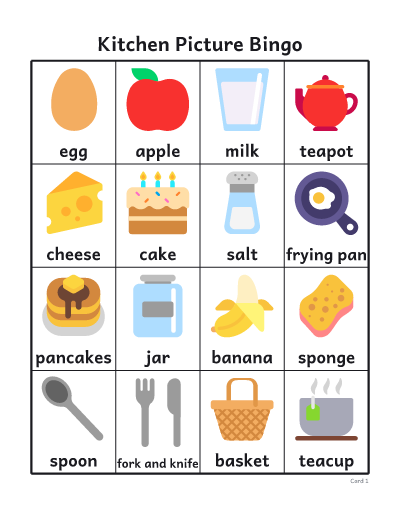
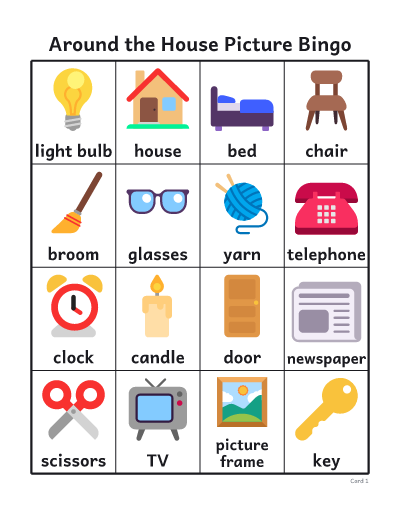
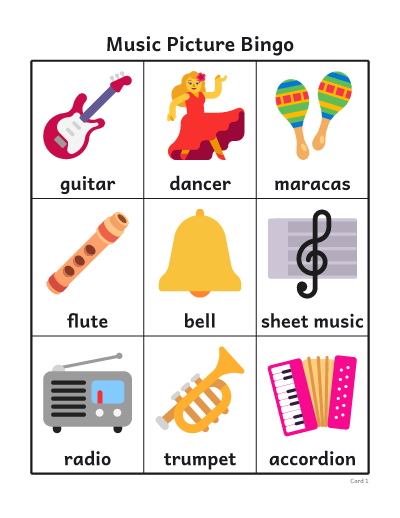
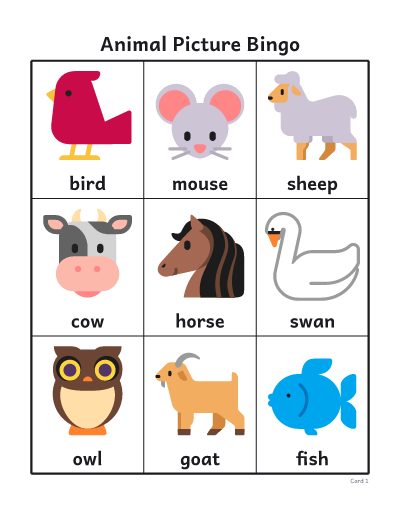
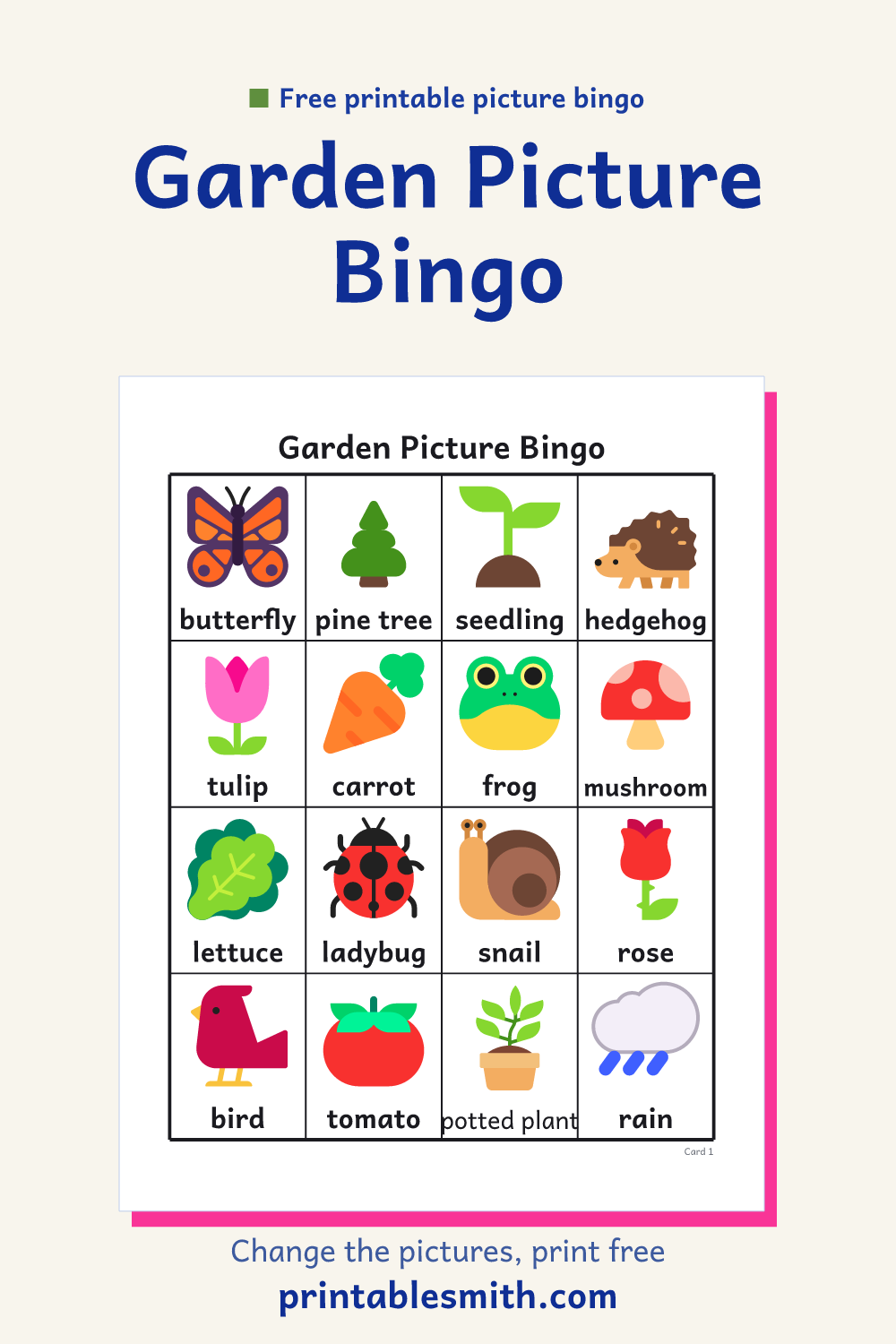
Pictures on the cards
 sunflower
 tulip
 rose
 hedgehog
 potted plant
 seedling
 herbs
 pine tree
 bee
 butterfly
 ladybug
 snail
 bird
 frog
 squirrel
 carrot
 tomato
 lettuce
 mushroom
 rain
Swap any picture, change the grid or the number of cards, and print as many as you need.
Who this game suits
For anyone who kept a vegetable patch, a window box or a bird feeder. The twenty pictures mix flowers, vegetables and garden creatures, so most cards have a little of each. Plan on twenty to twenty-five minutes. It is at its best in spring and summer, or on a gray day when the group misses being outdoors.
Running the game with a group
- Sort the calling cards into three piles: flowers and plants (rain goes here too), things to eat, and creatures. Call from each pile in turn.
- Give players a moment after each call to find the picture before you move on: the rose and the tulip sit close in color.
- Play to a line first, then carry on to a full card for the players who want to keep going.
Calling these pictures
- Name the season with the picture: “the tulip, a sure sign of spring”, “the tomato, ripe at the end of summer”.
- For the creatures, add where you would find them: the snail on the path, the ladybug on a leaf, the squirrel up the tree.
- Rain is the odd one out on these cards. Call it as “rain for the garden” so it sits with the rest of the set.
Ideas for this game
- Play near a window or out on the patio, and point to anything in view that is also on the cards.
- Ask who grew tomatoes or kept roses, and what the secret was.
- Bring a potted herb to pass around, so players can smell it when the herbs are called.
How these cards are made
- Big pictures is already on: one card to a page, with the pictures as large as the page allows and each name printed in bold of 18 points or more beneath it.
- There is no free space, so every square is a real picture to find. Turn it back on under “More” if your group likes a head start on a 3 × 3 card.
- The calling cards come last, three across, big enough to hold up to the room. Cut them out and draw them from a basket, or keep the page whole as a checklist.
- Choose black and white to save ink: the pictures print as bold outlines that stay clear on any printer, and players can color them in another day.
Tips for activity directors and families
- Call slowly, say each name twice and hold up the calling card, so players can follow by sight as well as by ear.
- Use large markers that are easy to pick up and too big to swallow, such as squares of colored cardboard, or let players cross squares out with a thick felt-tip pen.
- Play for a full card rather than a line when the group likes a longer, gentler game.
- Let a player draw the calling cards and show them around; many enjoy being the caller.
- Keep a few spare cards printed, so anyone who joins late can still play.
Save it for later
Pin this sheet to find it again next time, or to share it with another teacher or parent. The link brings them straight to this page, ready to print.
Save to Pinterest