How to teach skip counting, step by step
- Count by 10s, then 5s, then 2s: their last digits make clear patterns.
- Say each count aloud with a movement, such as a clap or a jump.
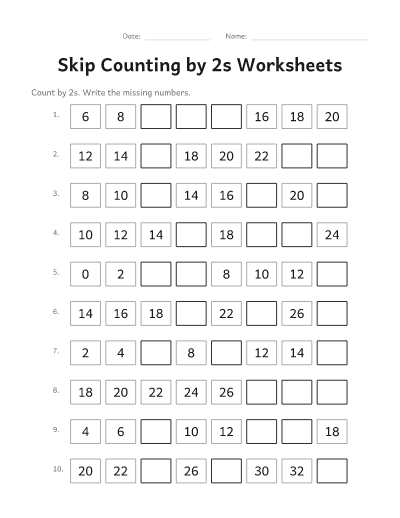
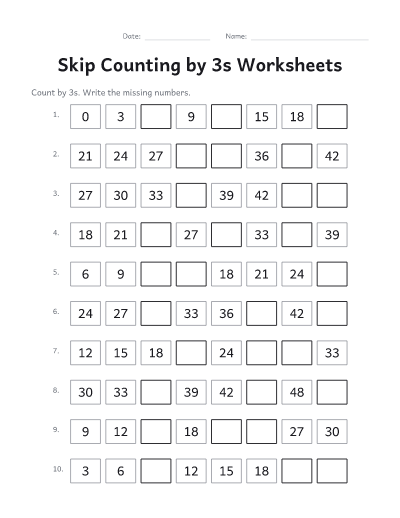
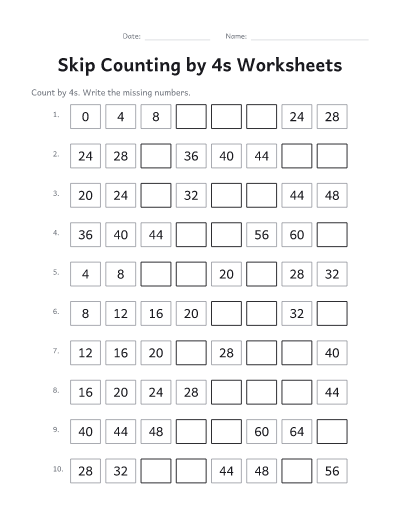
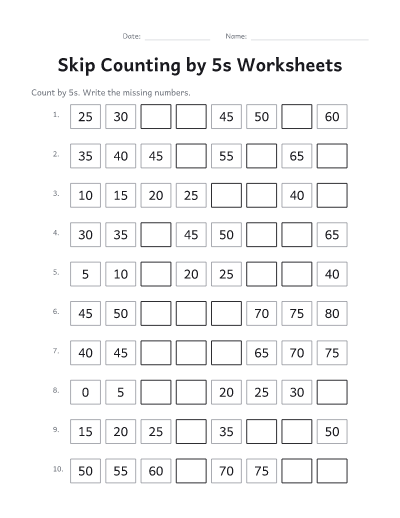
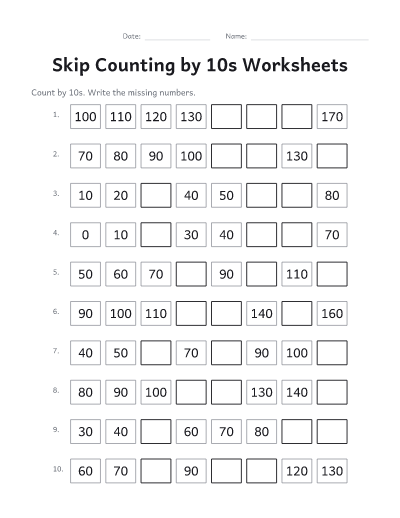
- Fill in missing numbers, starting from 0 and then from other places in the count.
- Add 3s and 4s, then link each count to its times table.
Each row of a multiplication chart is one skip count, so the chart is every count on one page.
Common mistakes
- Only ever starting from zero. Children who can only start at 0 are reciting. Start some counts at 30 or 45.
- Learning the count as a song with no numbers attached. Write the count down as children say it, so they see the numbers too.
- Moving to the times tables without the counts. A child who can count by 6s can work out 6 × 7 even before knowing it by heart.
Grade by grade
- Kindergarten: counting to 100 by 10s.
- First grade: counting by 2s, 5s and 10s.
- Second grade: by 5s, 10s and 100s within 1,000.
- Third grade: counting by 3s, 4s and up to 10s for the times tables.
Ideas for using these sheets
- Count real things in groups: eyes by 2s, fingers by 5s, dimes by 10s.
- Chant a count while bouncing a ball or doing jumping jacks.
- Read a finished row aloud, then say the matching times table.
Every setting can be changed above before you print, and “New problems” makes a fresh sheet as often as you like.